Get Full Government Meeting Transcripts, Videos, & Alerts Forever!
Get email alerts on the Venue Product Liability topic
No spam. Unsubscribe anytime.
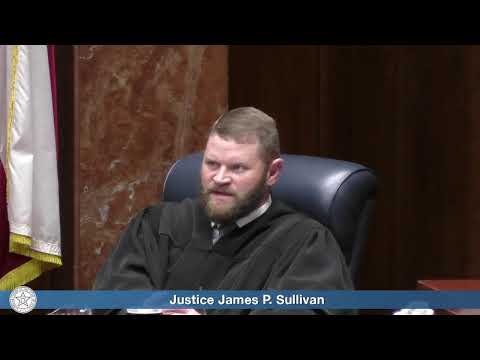
Texas Supreme Court takes up venue and product‑liability limits in Rush Truck Centers case
Summary
The court heard argument over whether the Dallas Court of Appeals properly applied Texas venue rules and the Texas Civil Practice & Remedies Code’s seller‑liability provisions in a wrongful‑death suit tied to a school bus.
The Supreme Court of Texas heard argument in Rush Truck Centers v. Sayre over two central questions: whether an interlocutory appeal was properly available in a multi‑plaintiff case, and whether venue was properly laid in Dallas County for product‑liability claims tied to a school bus.
Why it matters: The case combines two commonly litigated civil‑procedure themes — when interlocutory appellate review of venue lies in multi‑plaintiff lawsuits — with an interpretation of Texas’ product‑liability statute for non‑manufacturing sellers (discussed during argument as Texas Civil Practice & Remedies Code §82.003(a)(6)). The outcome affects where large multi‑party suits can be litigated in Texas and how courts read the statutory reach of “supplied” for venue and liability purposes.
Petitioners’ counsel, identified in the transcript as Mister Grafton, told the justices the Dallas Court of Appeals wrongly expanded the statutory phrase “the time the seller supplied” and thereby broadened liability for non‑manufacturing sellers; Grafton argued the statute requires actual knowledge of a defect at the moment of supply and that venue in Dallas therefore was improper. Grafton urged the court to read the multiple‑plaintiff interlocutory appeal statute (section cited in argument as amended in 2003) narrowly and to avoid a construction that would permit nearly every multi‑plaintiff case to be appealed before trial.
Respondent counsel, Mister Levinger, argued the trial court in this case did make the required factual determinations for interlocutory review and that when multiple plaintiffs are indistinguishable for venue purposes, an interlocutory appeal can still lie; Levinger told the court the Dallas Court of Appeals followed existing precedent and that the events in Dallas — ordering, delivery, equipping, inspection, titling and invoicing — supplied substantial contacts supporting venue.
Counsel questioned factual points and urged the justices to examine statutory text. The justices asked whether Congress’s (sic) or the Texas Legislature’s later enactments should be read to create a specific exception to the general bar on interlocutory venue appeals; they also pressed both sides on what “independently establish proper venue” means in practice and whether an individualized plaintiff‑by‑plaintiff assessment was required. The court discussed case‑management consequences if each plaintiff must separately establish venue facts.
On the product‑liability side, petitioners emphasized the statute was designed as a liability‑limiting measure and that extending “supplied” to “the entire sequence of events” in a distribution chain would negate statutory limits. Respondents pointed the justices to record evidence (cited during argument) tying the seller’s Dallas facility to inventory, inspection, invoicing and delivery activities and argued that knowledge of available safety devices at the Dallas facility supported the statutory “actual knowledge” element relevant to venue.
The argument closed with both sides responding to questions about statutory construction canons and about what the trial record does and does not show. The case was submitted; no decision appears in the argument record.