Get Full Government Meeting Transcripts, Videos, & Alerts Forever!
Get email alerts on the Utilities topic
No spam. Unsubscribe anytime.
Lewiston staff propose 20% sewer and stormwater rate increases; water rates held flat
Summary
City staff told the council they are not recommending a water rate increase for FY26 but propose 20% increases for sewer and stormwater to cover rising personnel, benefits and debt costs; council members asked about meter replacement, hydro credits and the new state-paid family medical leave program.
Lewiston finance and public-works leaders told the City Council at a workshop that they recommend no increase to water rates but a 20% increase to both sewer and stormwater charges for fiscal 2026.
City Finance Director Tracy Roy and Public Works Director Kevin Gonyea said the utility budgets face higher personnel and operating costs, rising debt service after the city—s 2023 bond sale, and uncertain energy credits tied to a long-standing hydro power agreement. Roy said sewer revenues would rise under the proposed adjustments but that the sewer fund would still show an operating deficit of roughly $331,230 in the FY26 draft; stormwater would show an operating deficit of about $167,444, she said. Roy also told the council that water revenues fell in the latest year and the water fund faces an estimated deficit in FY25 of about $383,679.
The recommendation matters because utility rate changes affect all customers and because many cost drivers are outside one department—s immediate control. Roy said personnel services across the utilities reflect step increases and cost-of-living adjustments; fringe benefit costs rose because some employees elected Main PERS and because employer retirement contributions rose from roughly 9.2% to about 10.2% in one plan and from 9.9% to about 10.2% in another. She also highlighted the budget effect of the new state paid-family-medical-leave program, which the city must now account for but for which the full long-term cost is still uncertain.
Directors gave specifics on major line items. Gonyea described a long-standing power-credit arrangement the city receives from a hydro asset (referred to in the presentation as the "Monte Hydro" credit) that historically offsets some pump-station and street-light power costs; he said the credit is reconciled on a calendar-year basis and can vary, which complicates forecasting. Roy noted increases in treatment chemicals: sodium hypochlorite, fluoride and other chemical unit-cost rises were cited as line-item pressures. On meters, Gonyea confirmed the city follows a 10-year replacement schedule for residential meters (5/8-inch standard) and expects about $200,000 per year for annual replacements; commercial meters are tested or calibrated on a vendor-supplied in-line schedule depending on size.
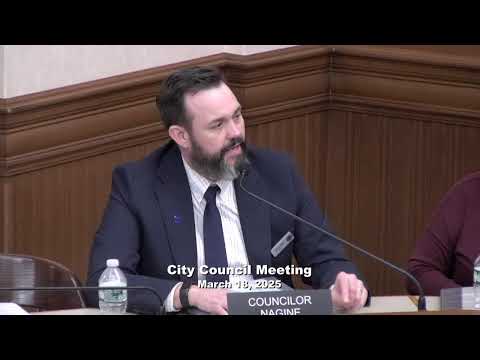
Councillors sought clarifications on key risks. Councillor Nejean asked when water could return to a surplus; Roy pointed to use of carry-forward balances and to the need to draw those down before seeking additional water rate changes. Councillor Gallant and others pressed on the new paid-family-medical-leave program: Roy said the state implementation remains incomplete and that local costs could change as employees sign on over the next year or two. Councillor Chittum asked about meter-testing requirements under the Public Utilities Commission; staff said PUC guidance still expects testing but that vendor-provided modern meters are often replaced rather than bench-tested, and that Lewiston has moved to a 10-year replacement target after a longer period of deferred replacements.
The council did not take a final vote on rates at the workshop; staff said the FY26 draft will return for further hearings. Councilors asked staff to provide additional breakdowns, including a clearer schedule of projected impacts by customer class and an itemized list of third-party contracts tied to billing and mail services.
What—s next: staff will refine the FY26 utility budgets, supply more detail to the council on carry-forward balances and rate modeling, and bring formal rate proposals to upcoming public hearings during the budget process.