Get Full Government Meeting Transcripts, Videos, & Alerts Forever!
Get email alerts on the Waste Tires topic
No spam. Unsubscribe anytime.
DEQ outlines short- and long-term steps to address illegal tire piles; grant plan proposed for parishes
Summary
Department of Environmental Quality officials told the House Natural Resources and Environment committee they will deploy short-term grants and pursue technology options for long-term disposal of waste tires; committee members pressed for authority and resources to clean large legacy piles.
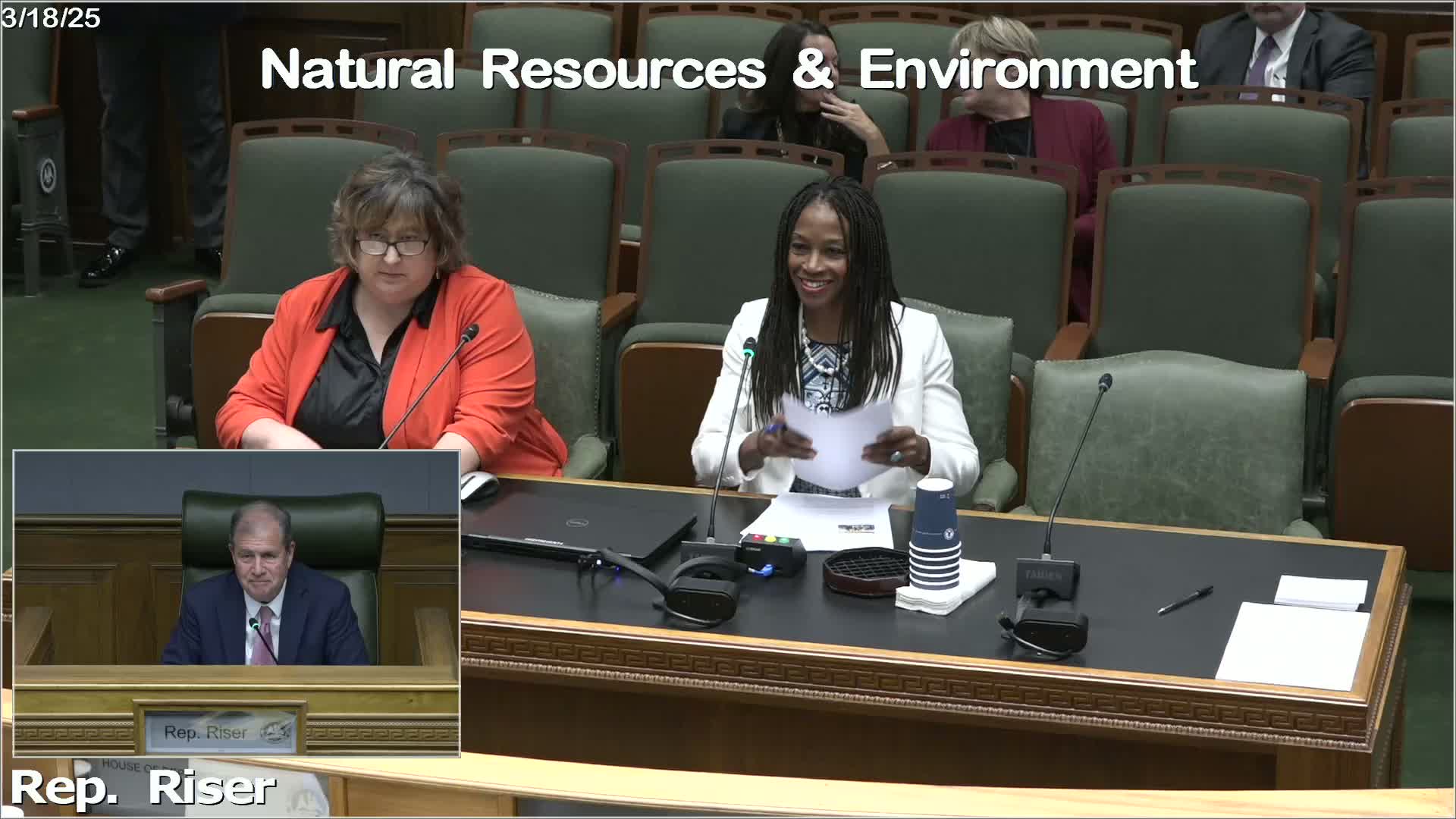
The House Committee on Natural Resources and Environment on March 18 heard the Louisiana Department of Environmental Quality describe immediate and longer-term strategies to address illegally dumped and legacy waste-tire piles, including a planned parish grant program and evaluation of tire-to-fuel technologies.
Aurelia Giacometo, secretary of the Department of Environmental Quality, told the committee the agency has completed statewide outreach and a formal town-hall report and that the department will use newly authorized budget authority to fund targeted parish grants this summer. "We're working very diligently to find solutions," Giacometo said, noting that municipal and parish officials told DEQ they often lack a predictable, affordable way to dispose of tires.
DEQ officials said the fund balance for the waste-tire program was about $7.6 million in fiscal 2024 and that the governor’s budget included approximately $1.3 million in additional authority to begin targeted projects. Michelle Burnett of DEQ’s Office of Management and Finance provided the fiscal summary for the committee.
Committee members focused on large legacy piles and public-safety risk. Representative John McCormick described a privately owned site in Caddo Parish where DEQ estimated roughly 200,000 waste tires remain and warned of fire risk to nearby villages. DEQ told the committee the agency had used its enforcement authorities and civil remedies where possible but said legal limits on entering private property without ownership or court order constrain immediate cleanup. Secretary Giacometo said the agency has sought to maximize available enforcement and that additional statutory authorities or legislative direction could improve deterrence and remediation.
Longer-term options discussed included expanding beneficial-use pathways (crumb rubber, civil engineering uses), tire-derived fuel and pyrolysis or other thermal technologies that convert tires to fuels or industrial feedstocks. Giacometo and staff noted tradeoffs: some end uses (playground mulch) have raised product-safety questions, other uses (road construction) face specification and durability challenges, and scaling tire-derived fuel or pyrolysis would need emissions and permitting reviews.
DEQ said it plans to roll out a parish-directed grant program this summer to help local governments remove legacy piles and establish collection points, and will continue outreach to expand permitted processors and beneficial-use projects. Agency officials asked legislators to consider statutory options to strengthen enforcement and to facilitate public-private markets that give tires a monetary value so they are less likely to be illegally dumped.
No committee votes were taken; members requested follow-up on specific sites, on fund accounting and on how grant applications will be administered.