Get Full Government Meeting Transcripts, Videos, & Alerts Forever!
State Water Board holds public hearing on draft 2026 303(d) list; staff outlines methodology, stakeholders press for revisions
Summary
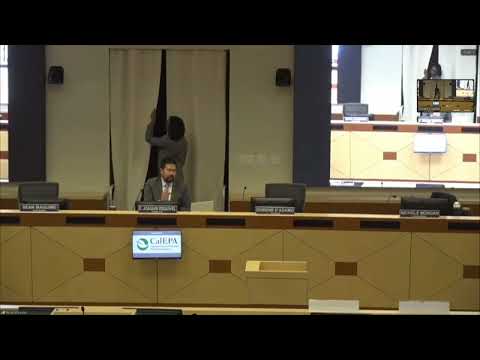
The State Water Resources Control Board on Tuesday, March 18, held a public hearing to receive oral comments on the draft Clean Water Act Section 303(d) list portion of California’s 2026 Integrated Report. Board staff emphasized that the hearing was to gather input and that the board would not take formal action at the session.
The State Water Resources Control Board on Tuesday, March 18, held a public hearing to receive oral comments on the draft Clean Water Act Section 303(d) list portion of California’s 2026 Integrated Report. Board staff emphasized that the hearing was to gather input and that the board would not take formal action at the session.
Anna Maria Saenz, a senior environmental scientist in the State Water Resources Control Board’s Assessment Policy and Process Unit, told the board that the Integrated Report is “an informational record of data and assessments used to inform the status of surface water quality throughout the state.” She said staff reviewed more than 1.4 million rows of data, yielding about 33,000 lines of evidence and more than 15,000 water‑quality assessments covering 983 water bodies for the draft report.
The draft 303(d) list staff presented recommends 426 new pollutant listings and 136 delistings. Saenz said the new listings are concentrated in pesticide and nutrient categories, while many delistings fall in pathogens and pesticide categories; she attributed hundreds of delistings in part to regional changes to objectives and regulatory programs. Staff also described a new approach to ranking Category 5 (TMDL) listings as high, medium or low priority: high priority means a TMDL is planned within two years, medium within two to 10 years, and low indicates no TMDL planned within 10 years or that another regulatory or restoration program is expected to address the impairment.
A major focus of the hearing was the use of benthic biological condition—measured using the California Stream Condition Index (CSCI)—as evidence of impairment when paired with an associated pollutant. Saenz explained staff applied the listing policy to place water body–pollutant combinations in Category 5 where a degraded benthic community (CSCI below…
Already have an account? Log in
Subscribe to keep reading
Unlock the rest of this article — and every article on Citizen Portal.
- Unlimited articles
- AI-powered breakdowns of topics, speakers, decisions, and budgets
- Instant alerts when your location has a new meeting
- Follow topics and more locations
- 1,000 AI Insights / month, plus AI Chat