Get Full Government Meeting Transcripts, Videos, & Alerts Forever!
Get email alerts on the Healthcare topic
No spam. Unsubscribe anytime.
Anvida Health outlines expansions, workforce and payer pressures in presentation to Yuma County supervisors
Summary
Anvida Health President and COO Robert Crenshaw told the Board of Supervisors the health system is expanding behavioral-health services, planning a 24‑bed hospital in San Luis, and stressing the importance of delayed state Medicaid "health 2" payments to local hospitals' finances.
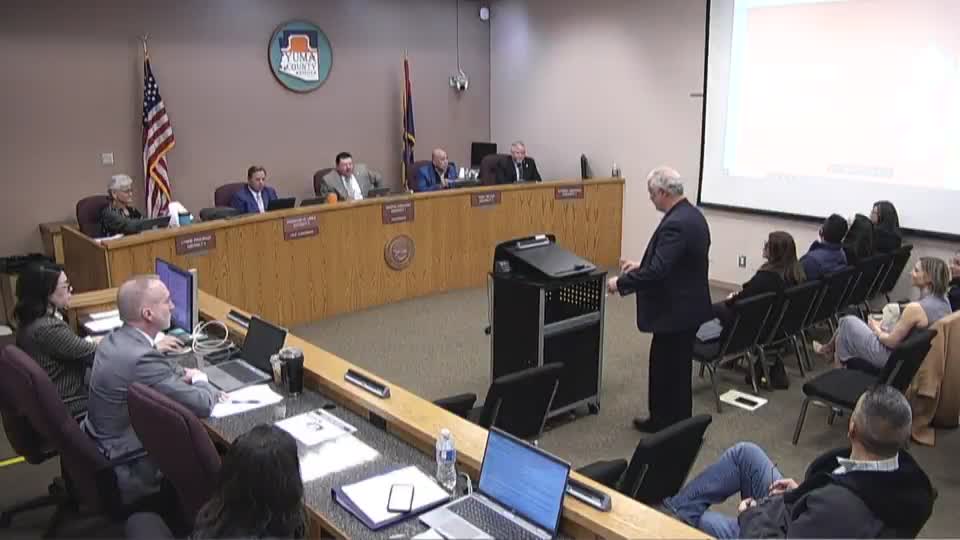
Dr. Robert Crenshaw, president and chief operating officer of Anvida Health, told the Yuma County Board of Supervisors on March 10 that the system is rebranding and expanding services in response to rising local demand for behavioral health and primary care.
Crenshaw said the system now employs more than 4,000 people and is building a broader health system that includes outpatient clinics, a behavioral health hospital and new residency programs. "What we do each and every day is build a healthier tomorrow," he said, summarizing Anvida's rebranding and purpose.
The presentation outlined specific growth: a 24‑bed behavioral health hospital and a psychiatry residency program that Crenshaw said increased local psychiatry providers from one to nine in two years; expanded intensive outpatient programs (including postpartum and teen IOPs); and a planned full‑service hospital campus in San Luis on an 80‑acre site with emergency services, operating rooms and a medical office building. Crenshaw said Anvida’s medical group now has more than 450 employed providers and that its residency programs keep a significant share of graduates in the community.
Why it matters: Crenshaw emphasized that behavioral health is a "loss leader" the system provides because community need is not otherwise met, and he framed the expansions as part of workforce and regional economic development. He also warned of payment risks. Anvida relies heavily on government payers, he said: "Over 80% of our revenue comes from government," and he told the board the health system is awaiting delayed "health 2" directed payments from the federal Centers for Medicare & Medicaid Services. "All hospitals in Arizona rely on this," he said, calling the payments critical to margins.
Board members asked about outpatient nutrition services and whether the rebranding followed an acquisition — Crenshaw said acquisitions occurred for some outpatient practices but that the rebrand reflects the system’s broader service mix rather than a sale. Commissioner Reyes commended the system’s local care expansion and asked about outreach to South County; Crenshaw described San Luis plans and said construction of that campus should finish by year’s end.
The presentation also included community‑impact figures: more than $20 million a year in charity care, over $6 million annually on internships and training programs, and a cited $3.5 billion overall economic contribution from employees and operations (figures provided by Crenshaw during his remarks).
Looking ahead, Crenshaw said Anvida will continue to expand behavioral‑health outpatient services and workforce training in partnership with Arizona Western College. He asked for continued local support in attracting industry and workforce to improve the payer mix that he said remains one of the most challenging financial dimensions for the system.
Ending: Supervisors thanked Crenshaw for the briefing. Several board members praised the hospital’s local services and the new psychiatry capacity; no formal action was taken by the board on the presentation.