Get Full Government Meeting Transcripts, Videos, & Alerts Forever!
Get email alerts on the Public Safety Homelessness topic
No spam. Unsubscribe anytime.
Spokane leaders and residents call for tougher enforcement and services as parks, encampments and public safety top town-hall agenda
Summary
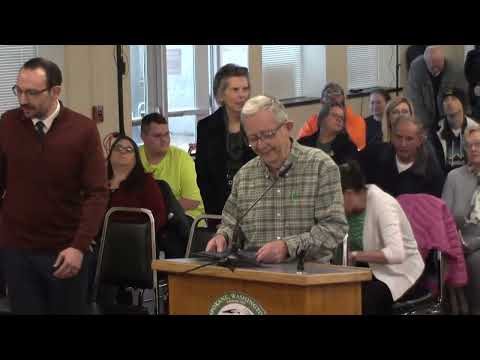
At a Spokane City Council town hall at the Northeast Community Center in March 2025, residents and council members pressed public-safety leaders on enforcement near parks and schools, the city’s approach to camping and sit-and‑lie laws, and police capacity in downtown hot spots.
At a Spokane City Council town hall at the Northeast Community Center in March 2025, residents and council members pressed public-safety leaders on enforcement near parks and schools, the city’s approach to camping and sit-and‑lie laws, and police capacity in downtown hot spots.
The discussion centered on where police should prioritize citations, how to pair enforcement with services, and whether existing laws and city resources are being used to protect children and public spaces. “Police officers are human beings too, and they're going to take the route of least resistance,” Spokane Police Chief Kevin Hall said. “For them, the easiest thing to write…and give a citation for is pedestrian interference.”
Why this matters: Speakers linked visible conditions — an encampment near a school, bonfires and drug use downtown, and deteriorated parks — to safety concerns for children and families. Residents urged clearer, faster enforcement and more coordinated responses across police, fire, code enforcement and service providers.
Chief Hall described recent changes in enforcement since national court decisions that once limited camping citations. “With the grants passed decision, we can now actually enforce camping laws,” he told the audience, pointing to an uptick in unlawful-camping citations over the past six months.
Spokane Fire Department Chief Julie Oberg said fire crews have used narrowly defined “compassionate warming fires” only in extreme temperatures and only when company officers determine the practice meets strict criteria. “This by no means sounds like it met that criteria,” she said when residents described a large bonfire near a downtown hotel.
Several residents described conditions they said endanger children. Angel Trout, a Shiloh Hills neighborhood council member, told the council that the Washington Tracking Network rates Census Tract 112 — parts of Shiloh Hills — at “10 out of 10” for poor health outcomes and pointed to Friendship Park’s cracked pavement and lack of a working water fountain as an example of neighborhood neglect. “Fixing the park isn’t just about the park. It’s about health and quality of life,” Trout said.
Council members said they can press other agencies and the parks board but stressed limits of the City Council's direct authority over parks. Council member Michael Cathcart reminded the audience that the park board is an independent entity with its own decisions; he urged residents to attend park-board meetings to press the issue at the source.
Downtown safety, encampments and the Redpath hotspot drew sustained attention. Council members and the police described “place management” as a central approach: working with property managers, licensing, code enforcement and fire to change how problem sites are operated. Chief Hall said the city is examining how properties are managed and seeking cross-agency responses when private property conditions contribute to public-safety problems.
Several speakers asked the council to make enforcement consistent citywide rather than limited to downtown. Council member Paul Wright said he will bring forward a sit-and-lie ordinance that would expand the city’s existing time/place/manner restrictions. Chief Hall said the department is open to conversations about changes to make sit-and-lie “a more usable tool.”
Residents asked for faster action on specific complaints. Chief Hall advised people to keep calling 311 or other reporting lines; he said the data drives resource allocation. The chief also identified a case number (E2502709) tied to a camper near Marietta as evidence the department was addressing a specific report.
What was not decided: The council and chiefs described policies and enforcement options but did not adopt new ordinances at the town hall. Several council members said formal hearings on homelessness-related ordinances are expected soon and urged public turnout.
Ending: Council members thanked residents for turnout and said they will continue to press for a combined approach — enforcement, property accountability and services — while urging neighborhood engagement with the parks board and other agencies.