Get Full Government Meeting Transcripts, Videos, & Alerts Forever!
Get email alerts on the Municipal Finance topic
No spam. Unsubscribe anytime.
County and city finance teams brief boards on expenditure‑limitation rules; voters may be needed to lift limit
Summary
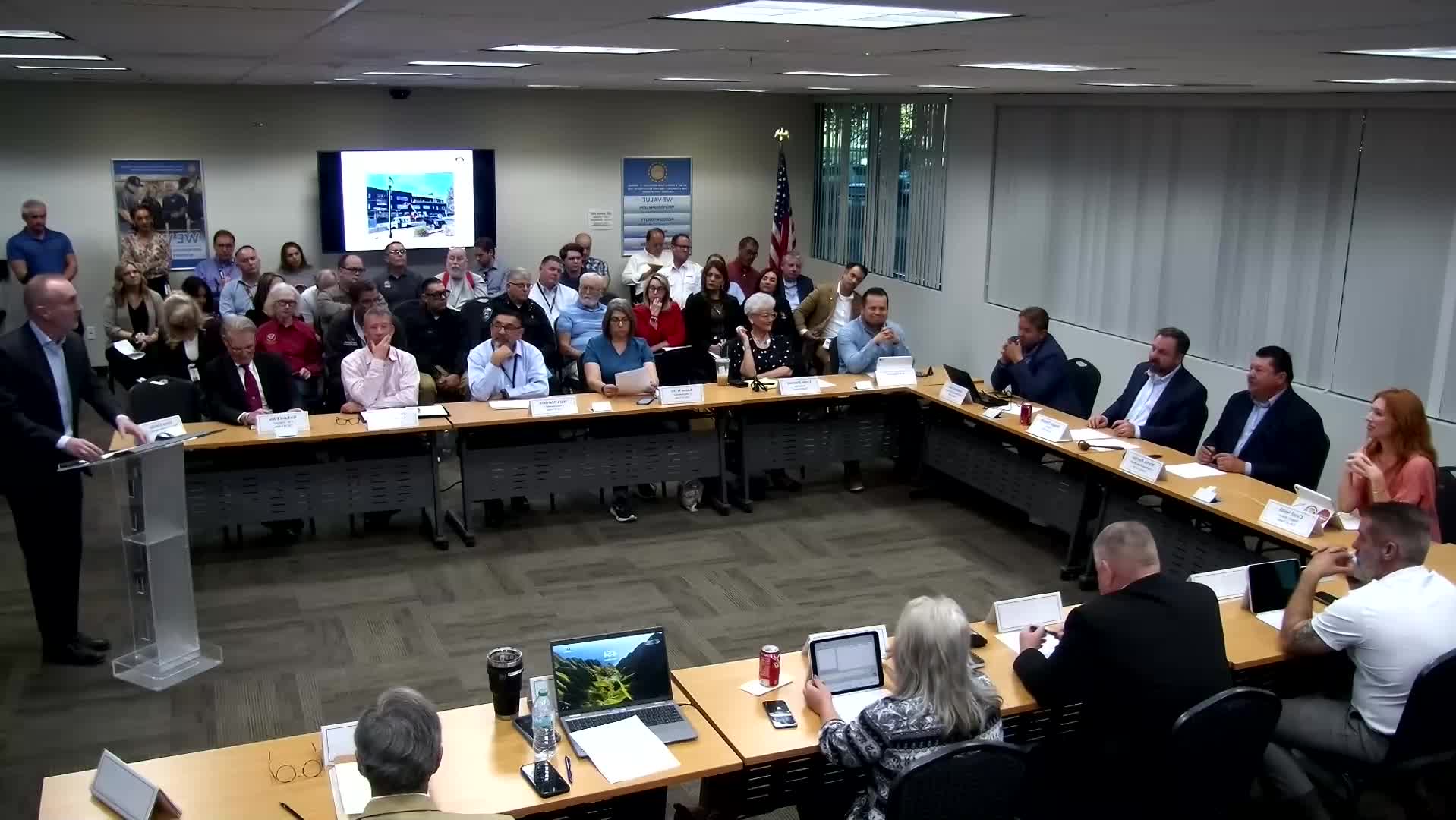
Yuma County and City of Yuma finance officials told the joint meeting that rising costs and a 2020 census adjustment have narrowed the gap between legal expenditure limits and actual spending and outlined options that include seeking voter authorization to raise the limit.
Yuma County and City of Yuma finance staff outlined how Arizona’s expenditure‑limitation law constrains local spending and described options — including a voter authorization — to keep services funded.
Humberto del Castillo, Yuma County chief financial officer, said the expenditure limitation follows Article IX, Section 20 of the Arizona Constitution and is computed from a 1980 base with population and inflation adjustments. He said the county must file an annual report and that the county’s CFO is the official filer.
"What does it do? It sets the base limit for actual expenses of local revenues," del Castillo said, adding that the municipality must designate the CFO to file the annual report and that erroneous filings can have criminal penalties for the filing official.
Del Castillo and Doug Allen, the city’s finance director, said recent population adjustments (the 2020 census) and rising costs narrowed the gap between the legal limit and actual expenditures. Both officials said their jurisdictions have relied on exclusions — notably accumulated investment earnings and certain debt proceeds — to stay under the limit; del Castillo said the county has roughly $25 million of carryover investment earnings that can be excluded from the limitation calculation for a time.
Officials said the options are (a) reduce spending and services, (b) pursue additional exclusions where allowable, or (c) seek voter approval to increase the expenditure limitation. Del Castillo reviewed three statutory paths to increase the base limit and described a public‑engagement and legal timeline that would be required to place an expansion on a statewide even‑year general election ballot.
Board and council members asked about voter receptiveness and communications strategy. Finance staff said transparency and factual outreach are critical and pointed to case studies where other counties passed expansions; staff recommended coordinating communications well in advance of any ballot measure. Del Castillo and city officials discussed a target of November 2026 for a coordinated measure but said statutory constraints and the need to coordinate publicity pamphlets and legal review mean the earliest realistic general election opportunity could be later in the decade.
The finance presentation urged strict budget monitoring by departments and strategic use of allowable exclusions and noted short‑term tools — such as short‑term bond proceeds that qualify as exclusions under state law — that can be used cautiously.