Get Full Government Meeting Transcripts, Videos, & Alerts Forever!
Get email alerts on the School Safety Sro topic
No spam. Unsubscribe anytime.
Houston County discusses SRO staffing, grant limits and school safety measures
Summary
Commissioners and law-enforcement representatives reviewed School Resource Officer staffing, state grant rules and possible school safety measures, including metal detectors and equipment purchases. No new county policy or binding directive was adopted.
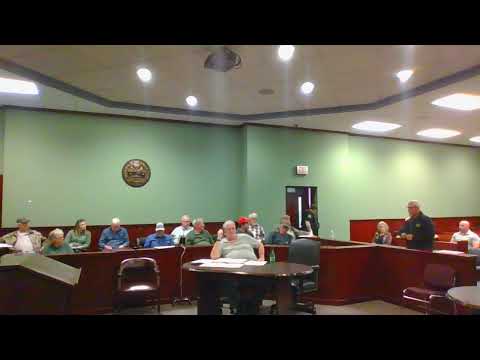
Houston County commissioners and law-enforcement representatives spent an extended portion of the meeting reviewing the county’s School Resource Officer (SRO) staffing, state grant rules and options for improving school safety.
The discussion centered on current staffing levels, grant restrictions and operational limits rather than on a new directive from the commission. Commissioners and a law-enforcement speaker described the county as funded for five SRO positions but reported fewer SROs currently in place; participants discussed returning unused grant funds if positions are not filled.
Why it matters: decisions about SRO deployment, how grant dollars can be used and whether to add equipment such as metal detectors affect school safety budgets and whether the county will need to supplement grant money from local funds.
Participants described the grant funding rules and local practices used by neighboring jurisdictions. A speaker identified as a law-enforcement representative explained that Montgomery County assigns deputies to school events and accumulates compensatory time for officers who staff games and other school activities; that office uses 86-hour pay periods before overtime triggers under federal law for law-enforcement employees. The meeting record shows the county is eligible for SRO grant funding tied to state criteria; one speaker said the state program provides up to $75,000 per officer under the governor’s plan, and commissioners noted the state will not fund additional officers for a single school beyond the state’s allocation rules.
Commissioners raised questions about how SRO time is scheduled and compensated, including whether officers who work off-hours or school events receive compensatory time rather than overtime. The record shows disagreement about how many SROs are currently assigned: speakers said two SROs were in place at one point and that other hires were in process; one participant said the county had three SROs and was hiring two more, while another described funding shortfalls that could require returning between $125,000 and $150,000 of grant money if positions are not filled.
Speakers also discussed nonstaff solutions for school safety. Several commissioners and the law-enforcement speaker warned that installing metal detectors raises logistical and legal issues: the school administration must typically be involved in searches, and administrators may need to be present to address Fourth Amendment and school-discipline concerns. Multiple participants said metal-detector operations can require several staff members to operate efficiently at large events and that schools would have to agree to equipment and staffing plans. The National Association of School Resource Officers (NASRO) was cited for its recommendation of one SRO per 1,000 students, a ratio some meeting participants said the county’s high schools exceed.
No formal motion or vote changing SRO policy, pay scales or funding allocations was recorded during the discussion. Commissioners observed they could request more information or pass a resolution to send recommendations to the grant administrator or to the sheriff’s office, but the meeting record shows only discussion and no binding action by the commission on SRO deployment or equipment purchases.
Looking ahead: commissioners said the topic may return to a future agenda as staffing and funding questions are clarified and as the county considers requests from the sheriff’s office and local schools.