Lifetime Citizen Portal Access — AI Briefings, Alerts & Unlimited Follows
Yuma city and county review 2024 building-code updates; Chapter 11 accessibility changes highlighted
Loading...
Summary
City of Yuma and Yuma County staff reviewed proposed 2024 International Code Council updates, including adoption of IBC Chapter 11 accessibility provisions, elevator and restroom requirements, and possible small safety amendments; county and city staff said they will present an adoption package in spring or early summer and flagged cost concerns.
City of Yuma and Yuma County building officials outlined proposed updates tied to the 2024 model codes and said they plan to bring a formal adoption package to the city council in late spring or early summer.
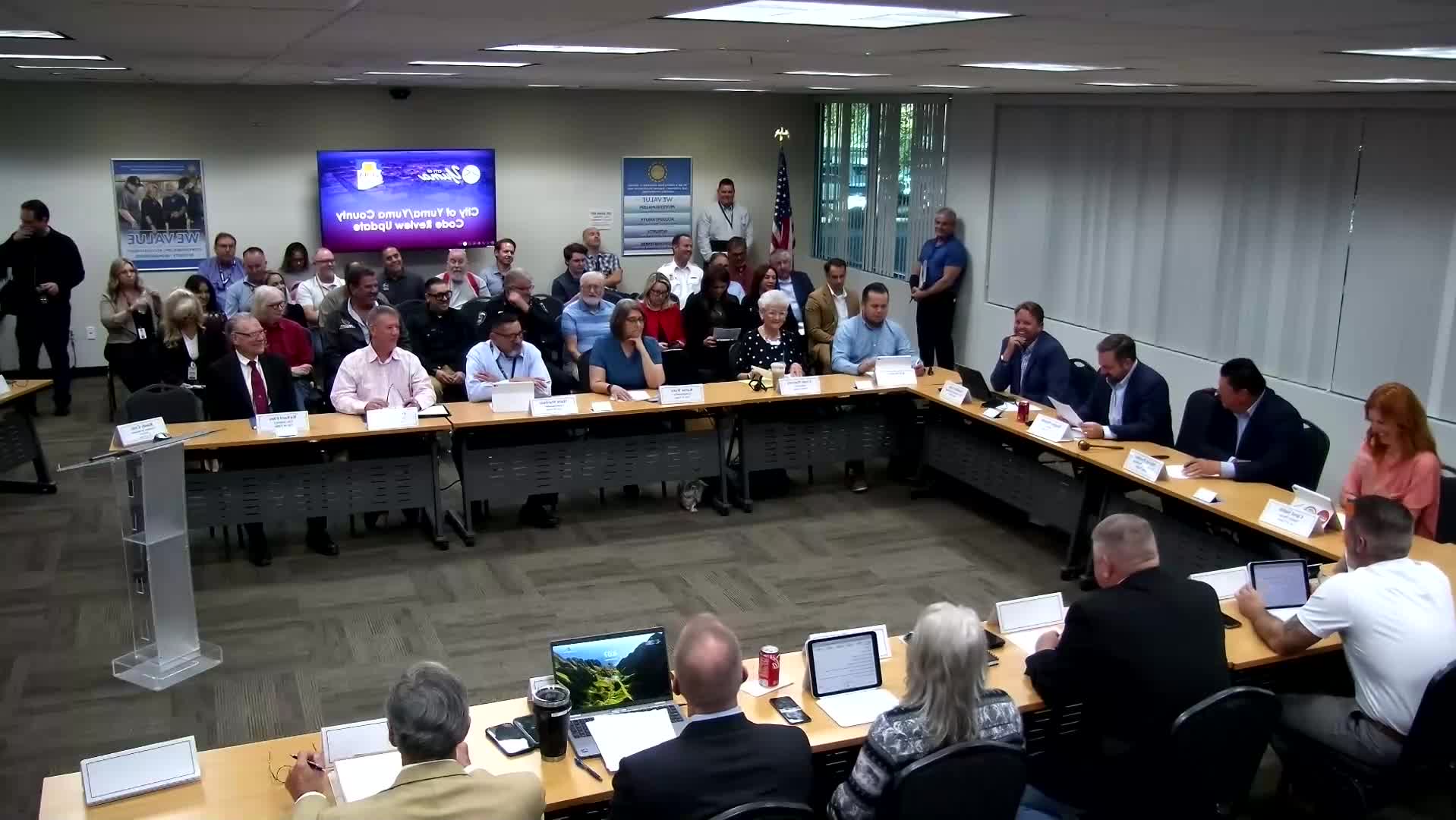
Randy Chris, City of Yuma building safety director, and Ty Martinez, Yuma County chief building official, told the joint meeting that the jurisdictions are working together on a six-year code cycle and that the most substantive near-term change is adopting Chapter 11 of the International Building Code, which brings the code language closer to the Americans with Disabilities Act (ADA).
"Chapter 11... our hope is to bring this information to city council for review and adoption... around the early part of the summer or late spring is our target date," Randy Chris said during the presentation.
Under the Chapter 11 language the officials described, larger commercial facilities would have new "family assist" restroom triggers (examples discussed included mercantile uses at about 100,000 square feet, restaurants at roughly 8,000 square feet and bars at about 5,000–6,000 square feet) and, where a family-assist restroom is required, an adult changing station would also be required. County staff noted a state statute adopted in February 2020 already requires adult-changing stations in certain public buildings and that Chapter 11 would align code triggers with that requirement.
Ty Martinez said the updated Chapter 11 would also narrow thresholds for elevators in two‑story buildings, explaining that some two‑story office buildings over the new threshold would need an elevator. Martinez noted adjustments to turning-radius requirements — from 60 to 67 inches — to reflect larger mobility devices in use by an aging population.
Officials also described a proposed minor local amendment to require timers on residential exhaust fans after staff reported multiple fire incidents tied to overheated fans. "One of the proposed amendments is going to be to add a timer on the residential fans," Martinez said.
Board members and supervisors probed the cost implications. Supervisor Lyons said she was "very much" concerned about added costs to housing and asked staff to be mindful of affordability when drafting mandatory changes. Marty staff replied the draft 2024 code reduces some previous energy demands compared with 2021 and that many amendments are optional or intended to be phased in. Officials said the jurisdictions plan a transition period so plans already in review would be grandfathered.
Chris and Martinez described an extensive local review process that uses two advisory boards of industry professionals — structural and electrical engineers, contractors, realtors and members at large — and that neighboring jurisdictions (San Luis, Somerton, Wellton and others) are invited to participate.
The jurisdictions said the city will refer its adoption action to the county, the city typically provides a six‑month grace period for new code implementation, and any new code would include a 30‑day notice period before final adoption steps. Staff asked the councils and the board for questions to refine the draft before formal hearings.
The presentation included technical, chapter‑by‑chapter review notes and staff promised more detailed cost and energy‑impact information as the process moves toward formal consideration.