Get Full Government Meeting Transcripts, Videos, & Alerts Forever!
Get email alerts on the Governance topic
No spam. Unsubscribe anytime.
Board adopts new rules of order, creates annual organizational meeting and tightens agenda procedures
Summary
Yavapai County supervisors unanimously repealed an earlier resolution and adopted revised rules of order that establish an annual organizational meeting, allow two members to place items on agendas, authorize the chair to sign limited routine documents between meetings, and require roll‑call votes.
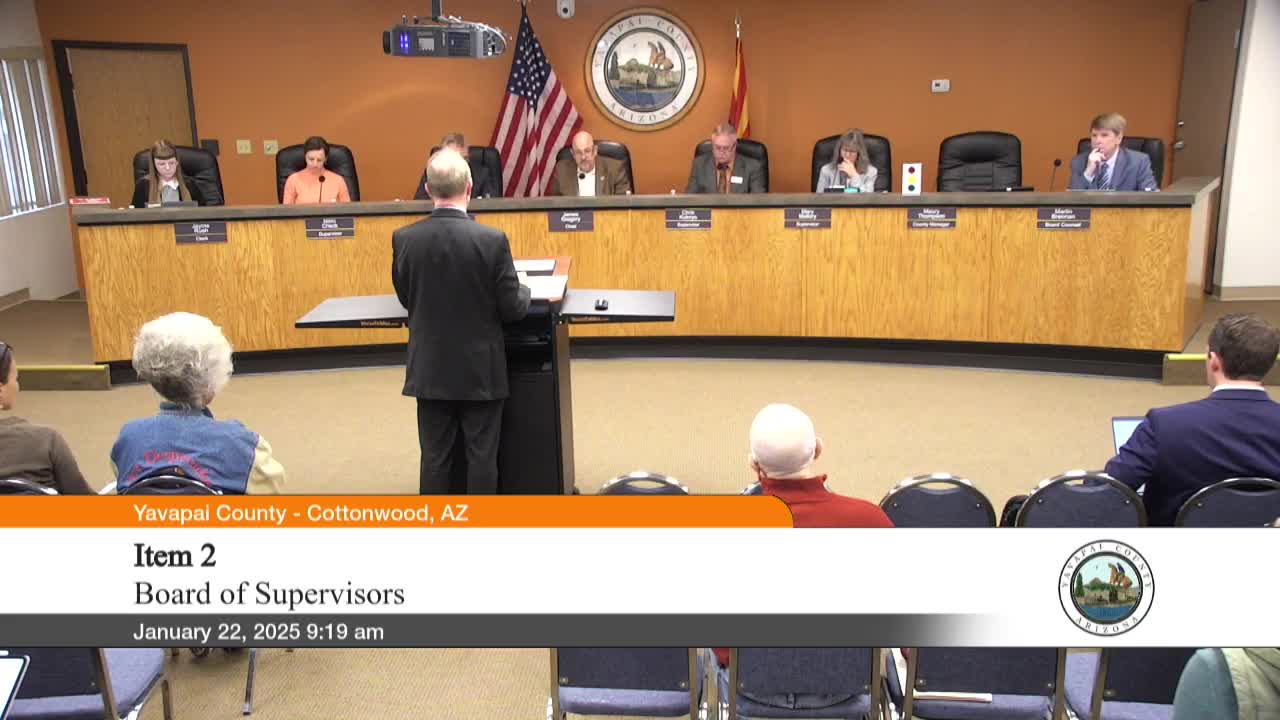
The Yavapai County Board of Supervisors on Jan. 22 voted unanimously to repeal Resolution No. 18‑22 and adopt revised rules of order governing board meetings.
County Manager Maury Thompson highlighted the principal changes, including creation of an annual organizational meeting — the first meeting each calendar year — where the board will review rules of order and elect a chair and vice chair. Thompson said the change is intended to reduce confusion that can arise when newly elected members take office.
Other key changes the manager summarized include:
• Granting the chair limited authority to sign routine, non‑controversial documents that make no financial commitments between meetings, provided the chair notifies the board at its next meeting;
• Allowing any two board members to place an item on a future agenda either in a public meeting or by contacting the county manager;
• Directing the county manager to place certain matters on the consent agenda and setting criteria intended to curb overuse of consent;
• Requiring individual board members not to direct the county manager to conduct work that requires more than four hours of staff time per event without board approval; and
• Requiring roll‑call votes at all meetings to improve transparency about individual member votes.
Supervisors asked clarifying questions about emergency authority when elected officials change midterm; the county manager and county attorney noted the board may call an emergency meeting and may appoint a chair pro tem if necessary. After discussion, the board moved the ordinance change and approved the new rules by unanimous roll‑call vote.