Get Full Government Meeting Transcripts, Videos, & Alerts Forever!
Get email alerts on the Zoning Controlled Substances topic
No spam. Unsubscribe anytime.
Louisa County planning commission moves proposed rules on retail sales of controlled substances to public hearing
Summary
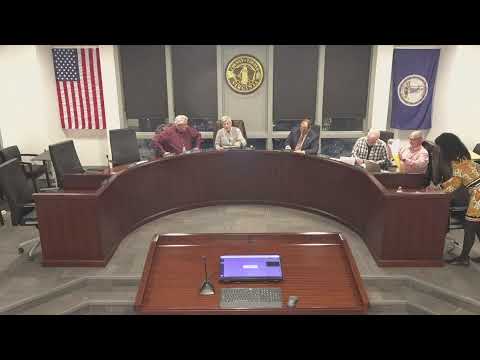
The Louisa County Planning Commission voted to move proposed zoning language regulating retail sales of controlled substances to a public hearing in April after staff presented draft definitions and a zoning chart that would generally require conditional use permits (CUPs) in most districts.
The Louisa County Planning Commission on a voice vote agreed to advance proposed zoning language that would regulate retail sales of controlled substances and send the revisions to a public hearing in April.
Commission staff presented a draft definition and a chart showing which zoning districts would allow retail sales by right or require a CUP, and commissioners discussed zoning categories such as A1, A2, C1, C2, RD and PUD and how existing pharmacies would be treated. The presentation recommended treating the use as a higher-intensity retail use and noted C2 in growth areas as the likely zone for by-right allowance if any.
The item drew repeated questions about how the proposal would affect pharmacies, farm stands and agricultural operations. Staff clarified that existing pharmacies in towns would not need to obtain a CUP if already operating in the same location; new entrants would be subject to the updated rules. Commissioners asked whether agricultural uses, roadside farm stands and tobacco or alcohol sales should be explicitly excluded; staff said they would review and tighten the draft definition—specifically the “agricultural activity passive” language—and report back before formal advertisement.
Planning commissioners discussed enforcement and process: a CUP was described as a tool that allows conditions of approval tied directly to neighborhood impacts (for example, entrance alignment), whereas rezoning proffers are voluntary commitments tied to rezoning. Commissioners reiterated that conditions attached to a CUP can be made enforceable and would remain on the approved CUP unless amended.
The chair called for a motion to move the draft language to public hearing. A motion was made and seconded; the commission recorded voice votes in which several members voted yes. The chair declared the motion passed and said the item would be advertised for the April meeting.
Staff next steps include clarifying the agricultural-related language in the definition, confirming the exact zoning chart to be advertised, and preparing materials for the public hearing where the public will be able to comment. The commission indicated the public hearing on the draft retail-sales language will be on the April agenda.