Get Full Government Meeting Transcripts, Videos, & Alerts Forever!
Get email alerts on the Inclusion Protection Resolution topic
No spam. Unsubscribe anytime.
Flagstaff Unified board reaffirms inclusion and protection resolution after public comment and failed tabling attempt
Summary
The Flagstaff Unified School District Governing Board voted to adopt a reaffirmation of its Inclusion and Protection resolution at its February regular meeting, after public comment and a failed motion to table further consideration.
The Flagstaff Unified School district Governing Board voted to adopt a reaffirmation of its Inclusion and Protection resolution at its February regular meeting, after a public comment period and a failed motion to table further consideration.
The resolution restates the district’s commitment to equity and to protecting students’ access to public K‑12 education, and includes specific provisions that immigration officials must present a judicial warrant to enter district property, that warrants will be reviewed by the superintendent and the district attorney, and that parents must be contacted before an official interviews a student. The text also directs compliance with applicable federal and state law and with the Family Educational Rights and Privacy Act (FERPA).
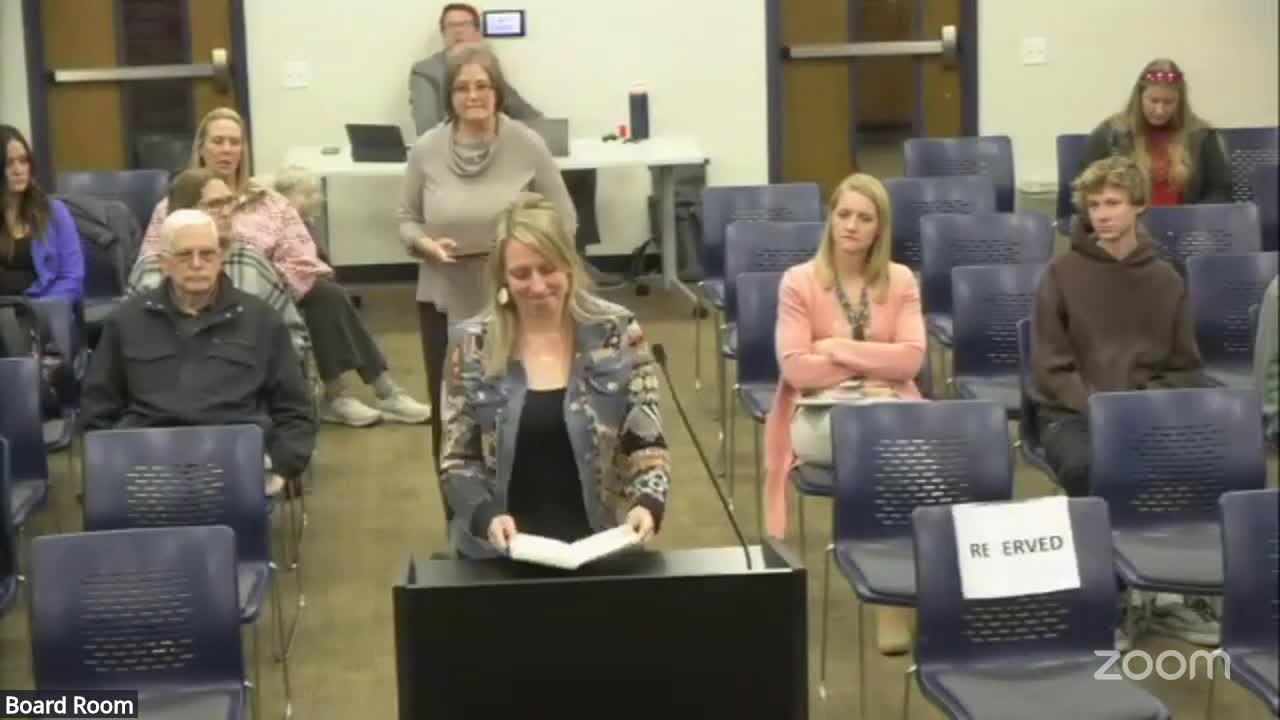
Supporters who spoke during the public comment period said the resolution is necessary to protect students. “FUSD’s commitment to educating and serving all students, all of them, makes me proud to be an educator here in FUSD,” said Jillian Hernandez, who identified herself as a parent and an employee in the district. Jessica Kitterman, who said she was one of the original writers of the district’s 2017 inclusion resolution, urged board members to reaffirm updated language and said the district should “comply with official judicial warrants and laws, but in the least traumatic way possible.”
Several speakers raised concerns or described grievances. Natalia Reyes Garcia thanked the board and superintendent for the district’s effort to produce the resolution. Holly Jones, a former employee who described a long personnel dispute, told the board she feels she has not been heard and urged the board to review documentation; during public comment she said, “All I’m asking is to be heard.”
During the board discussion a member asked for input from the district’s protective partners — specifically the sheriff, Flagstaff Police Department chief and the county attorney — and moved to table further action while the district studies the resolution’s potential impacts on stakeholders. That motion was seconded and put to a voice vote; the motion to table did not carry. The board then moved to adopt the resolution; the board president called the question and the motion to adopt carried.
Board members who spoke during the discussion said the resolution was reviewed by district legal counsel and that it is intended to operate within existing state and federal law. The agenda staff report posted to accompany the item notes the resolution will be interpreted “in compliance with any and all applicable federal and state laws, regulations or rules, and governing board policies and procedures.”
The resolution’s operative language includes commitments to: strengthen processes that elevate diverse student voices; work with local, state and national partners to create opportunities for historically marginalized students; provide counseling resources; equip staff with training and resources; offer supports for students impacted by discriminatory policies within the district’s legal authority; prohibit entry to a school site if the educational setting would be disrupted; require immigration officials to present judicial warrants for entry; review warrants with the superintendent and district attorney; contact parents before officials interview students; and follow FERPA guidelines regarding personally identifiable information, including immigration status.
The board did not publish a roll‑call tally for either the tabling motion or the final adoption during the meeting transcript; votes were taken by voice and recorded as “ayes” and “nays” in the minutes. The board also heard several related items and routine business during the same meeting.
The district plans to communicate the resolution and related procedures to staff and families; during the meeting a board member said they would encourage the superintendent and staff to use multiple outreach methods — including town halls, Q&A sessions and drills — to explain district policies and practices around safety and legal processes.
The board’s action reaffirms policy language; it does not create new statutory authority. The district said the resolution will be implemented consistent with applicable law and existing board policy, and staff will continue to coordinate with legal counsel and local safety partners as needed.