Get Full Government Meeting Transcripts, Videos, & Alerts Forever!
Get email alerts on the State Legislation Session 2025 topic
No spam. Unsubscribe anytime.
Salt Lake City legislative team reports mixed results from 2025 session; public safety, transportation and flag bills altered
Summary
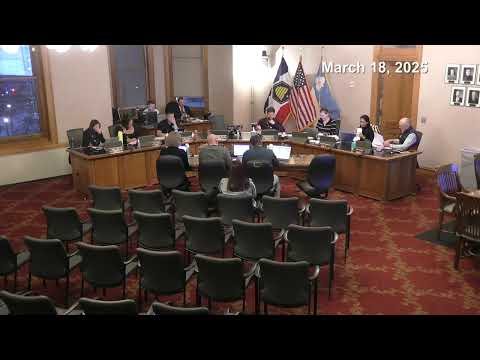
City legislative affairs staff summarized outcomes from the 2025 Utah legislative session, highlighting negotiated changes to several bills that affect Salt Lake City finances, public safety and municipal control over streets and flag displays.
Salt Lake City’s legislative affairs staff summarized key outcomes from the 2025 Utah legislative session, telling the City Council the session produced dozens of measures that will affect city operations, funding and regulatory authority.
Speaking to the council, Angela Price, the city’s legislative affairs lead, said the session was intense and “had a much different tone this year” and credited city lobbyists and partners for improving several bills that started in a worse form. She said Salt Lake City tracked 345 bills and 523 substitutions and that “582 bills passed,” with 235 identified by city finance staff as having a fiscal impact.
Price and Kate Bradshaw, who leads the city’s lobby team, told council members that some high-profile bills were substantially amended during negotiations. Items Price highlighted included HB465, described in the briefing as “public safety amendments”; a transportation bill described in the briefing as “transportation amendments” that now restricts only permanent projects that reduce vehicle lanes on arterials and collectors in a defined study area; HB77, titled in the briefing as “flag display amendments,” which narrows what flags political subdivisions and schools may display and creates a complaint/fine process; HB267, a public-sector labor bargaining bill now signed by the governor; SB26, a reinvestment tool to support redevelopment around the Delta Center area; and HB360, which the briefing said contains $10,000,000 for legacy-city housing rehabilitation.
Price flagged provisions of HB465 that expanded state oversight of mitigation funding and required an interagency agreement with the state Department of Public Safety for Salt Lake City; earlier drafts would have imposed penalties and risked loss of mitigation and road funding if the city did not enter agreements. In the transportation measure, the staff said the final language applies to permanent changes that “decrease the number of vehicles that travel on an arterial or collector,” exempts residential streets, and established a mobility-plan review process with UDOT for projects outside certain exemptions.
On HB77, Price said the bill enumerates a specific set of flags allowed on government-owned outdoor flagpoles and establishes a complaint process through the state auditor with a $500-per-day fine for violations; the governor had until March 27 to sign, veto or allow the bill to become law without signature. Council members raised concerns about free-speech implications and whether the city could adopt local limits on certain hateful symbols; Price said the city attorney would need to advise on legal constraints.
Price provided session statistics and fiscal tallies: 958 bills introduced in the session, 582 passed, 32 high-priority bills tracked for the city, and finance staff flagged 235 bills with fiscal impacts (26 affecting expenses only, 83 affecting revenue only, 26 affecting both). She said the legislative affairs division will produce a master spreadsheet analyzing the 345 tracked bills and assign implementation tasks to departments.
Why it matters: the bills identified in the briefing could change how the city manages public safety partnerships, street design authority and employee labor relations, and could affect the city budget through new costs or lost funding if implementation or compliance is required.
The briefing concluded with council questions about next steps, including the city’s internal timeline for producing department-specific analyses and the mayor’s office and council receiving a public-facing dashboard showing which enacted bills interact with the city’s public safety plan.