Get Full Government Meeting Transcripts, Videos, & Alerts Forever!
Get email alerts on the Procurement And Interlocal Agreements topic
No spam. Unsubscribe anytime.
Council defers final reading of interlocal purchase‑agreement ordinance after members seek wording changes
Summary
Councilors deferred final reading of an ordinance to revise Spokane Municipal Code language on interlocal purchase agreements and RCW piggybacking, after councilors requested additional review to resolve wording concerns about joint vs. join agreements.
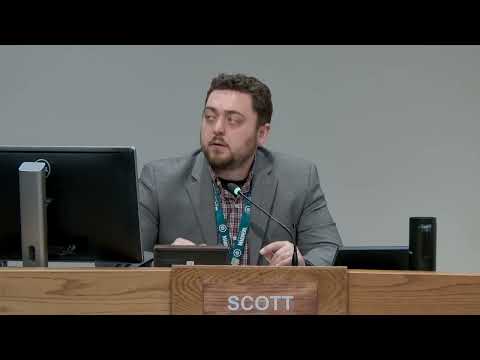
Staff member Jason and Staff member Adam briefed the Spokane City Council on an ordinance intended to “clean up” language in the Spokane Municipal Code that governs interlocal purchase agreements used for piggybacking under state law. Adam said the proposed language tracks existing state requirements and the language already in the code, but councilors said they wanted more time to resolve specific wording questions.
Council Member Bridal moved to defer final reading of the ordinance to April 14 to allow time to work through language changes; Council Member Spohn seconded the motion. Bridal described the issue as a relatively small drafting concern — for example, whether the code should use the term “join” vs. “joint” in certain contexts — and said additional time would allow council and administration to reconcile the text. The council later took a voice vote and the deferral carried.
During agenda review the council again moved to defer the item and a motion to defer final reading to April 20 was made and seconded; council indicated no operational impact from a brief delay and approved the deferral. Staff and councilors discussed timing for any amendments to be submitted so the changed language would appear in the first reading packet; council rules and spring‑break scheduling were cited as factors.
Councilors also discussed whether the drafting issue could be treated as a clerical (Scribner’s) error or whether it reflected substantive differences that warranted formal amendment. Staff said the phrasing mirrors existing RCW language and is not strictly a scribe error.
The item was deferred for further drafting; no final amendment or ordinance adoption occurred at the briefing.