Get Full Government Meeting Transcripts, Videos, & Alerts Forever!
Get email alerts on the Public Safety Rail Service topic
No spam. Unsubscribe anytime.
Fall River officials, MBTA and first responders outline safety, training and access plans ahead of commuter rail service
Summary
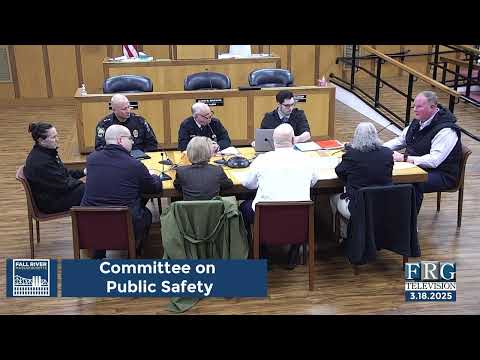
Fall River’s Committee on Public Safety met March 18 to review preparedness for the upcoming MBTA commuter-rail service, focusing on training, access points, interagency coordination and data collection; the committee approved convening with police, fire, MBTA and others to continue planning.
The Fall River Committee on Public Safety on March 18 convened MBTA and local first responders to review training, access and operational plans ahead of the start of MBTA commuter-rail service, with officials urging residents to stay off tracks and promising continuing coordination.
The committee approved a resolution to convene with the police chief, fire chief, a representative from the MBTA and other interested parties to discuss first-responder training, public-safety information and security plans related to MBTA commuter-rail operations. Council members voted in favor of the motion without recorded opposition.
Why it matters: The new commuter service introduces sustained, high-speed train traffic through Fall River and adjoining communities. Local police, fire and emergency-management officials told the committee they have been coordinating training, access and equipment to respond to incidents on or near the tracks.
MBTA and MassDOT project director Jean Fox said the rail will be “active on the 20 fourth,” and stressed the scale and speed of the service during the meeting. Fox told the committee that a consist of five coaches and a locomotive “if it’s going 55 miles an hour, it takes a mile or 18 football fields to stop,” and urged residents to avoid the tracks.
Fire and EMS training: Fire Chief Jeff Bacon said his department made a two-hour, mandatory online familiarization and safety course available to all firefighters; those who completed the course are eligible for a hands-on training session in April in New Bedford. Bacon said there are 10 spots available for the April hands-on session and that the session will be recorded for future refresher training. Acting EMS Chief Beth Fonts said she expects EMS to be included in future hands-on training and recommended collaborative training with police and fire.
Access points and keys: Emergency-management officials described work to identify access points, staging areas and man gates along the right-of-way. According to the committee discussion, six staging areas and six man-gate access points were identified for apparatus or medical evacuation; keys for a common lock were distributed to incident commanders with protocols requiring dispatch to confirm trains have been halted before gates are used.
Interagency coordination and data: Police Deputy Chief JT Hoer and other speakers said dispatchers will create specific site identifiers in the records-management system to track incidents tied to the rail corridor; officials said they will amass data about call locations and types to inform future resource decisions. The committee agreed to reconvene in roughly three months to review issues that arise after the start of service.
MBTA police and coverage: Officials said MBTA police will be informed of significant incidents but that their initial on-site presence and response protocols are not finalized. Local police said they will continue to respond to incidents in the city and will coordinate with MBTA police as needed.
Equipment and mutual aid: Officials noted a regional grant from the MBTA provided extrication equipment and technical tools to Bristol County communities, and that the city has been designated to receive a significant share of technical-rescue equipment because of its on-duty firefighter complement.
Operations and frequency: Committee members repeated MBTA-supplied messaging that commuter trains will operate frequently; one speaker said service could include a train every 30 minutes Monday through Friday and operate broadly between the early morning and late night hours. Officials urged residents to review MBTA safety materials and school outreach resources posted online.
The committee also approved routine business at the meeting, including acceptance of February minutes and a motion to adjourn at the conclusion of the agenda.
Ending: Committee members said they will continue to refine protocols, training and data collection as service begins and requested an update on a staffing-and-station study for the fire department that uses five years of run data and is expected to take roughly six to eight weeks to compile.