Get Full Government Meeting Transcripts, Videos, & Alerts Forever!
Get email alerts on the Budget topic
No spam. Unsubscribe anytime.
Committee grills central office and principals on FY26 staffing, vacancies and proposed conversions
Summary
School leaders reviewed FY26 budget requests and responded to committee questions about unfilled positions, conversions, SEL staffing and unified-arts requests. HR and central office explained a temporary hold on some postings and plans to recruit and pursue partnerships to fill vacancies.
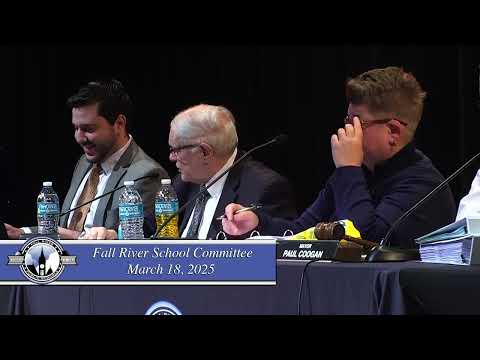
The Fall River School Committee spent the bulk of its March 18 meeting on the proposed FY26 budget, with principals and central office staff answering sustained questions about staffing conversions, unfilled positions and program priorities.
Superintendent Dr. Mary Curley told the committee she provided principals a standard presentation template as a guide for budget requests and said principals used it “for consideration” while preparing their school budgets. She said the administration encouraged conversions of existing positions rather than adding entirely new roles where possible. "I did... send it twice out to the school leaders and departmental leaders and there was definitely some language in there that said like it would be a tough sell really to just create new positions that we didn't already have," she said during the meeting.
Why the debate mattered: several principals described specific requests that did not make the prioritized budget list — requests for unified-arts (visual/performing arts) teachers at Stone and RPA, conversions from itinerant positions into full-time unified-arts roles, and additional instructional-support staff. Committee members repeatedly pressed whether vacancies were being filled and whether any hiring freeze or holding of postings had occurred.
Human resources and central office responses - A central-office HR representative said the district had intentionally held some open postings during the year to manage carryover positions and to coordinate recruitment partnerships with higher-education institutions; the HR director said some positions were not posted or were held while the district explored partnerships that would support candidates. - The human resources manager said the district had about seven or eight open budgeted positions being monitored and that some vacancies had not been advertised because of planned reconfigurations or anticipated partnerships.
Principals' priorities and clarifications - Stone School principal Mary Ellen explained a request for a unified-arts/visual-arts teacher. Stone had relied on two itinerant art and music providers who worked part time; the principal said a full-time unified-arts teacher would allow therapeutic art groups and more in-house continuity. The budget binder showed the unified-arts request on a wish list rather than in prioritized funding. - CUS (middle school) principal described converting a vacant literacy-coach line into an ESL (English learner) coach in response to a marked increase in ESL enrollment; the principal said about one third of CUS students now receive ESL services. - Morton Middle School leaders described multiple SEL supports in place (vice principals, school adjustment counselors, SEL liaisons) and said they were converting one coaching role into an ESL coach while keeping a literacy coach in place; committee members questioned why coaching and intervention staffing differed between buildings with comparable student loads and low MCAS percentiles. - RPA principal Riley asked the committee to prioritize a visual-arts position for programming parity; committee members discussed conversions and noted the superintendent’s office would look at unified-arts staffing across district schools.
Vacancies and hiring - Principals reported multiple vacant instructional-support-liaison (ISL) and paraprofessional lines; several said positions had been difficult to fill. HR confirmed some postings had been intentionally held and that the department was pursuing targeted recruitment and university partnerships (UMass Dartmouth, Bridgewater State, Roger Williams) and a “grow your own” program to develop local candidates.
Costs and next steps - Committee members signaled they expect central office to return with specific conversion plans and staffing sources when positions are added (for example, the RPA arts position). The central office said it would report back on how conversions and hires would be implemented.
Why this matters locally: hiring, conversions and vacancy management affect whether students receive direct services (coaches, SEL liaisons, unified-arts teachers) in each school; several committee members framed their questions as equity concerns — asking why schools with lower assessment percentiles or larger enrollments did not receive comparable intervention staffing.
The budget review continues at future meetings; several votes at the session directed the superintendent and staff to bring clarifying plans to the committee for implementation.