Get Full Government Meeting Transcripts, Videos, & Alerts Forever!
Get email alerts on the State Psychiatric Hospitals topic
No spam. Unsubscribe anytime.
State health officials brief lawmakers on psychiatric hospitals, Northville build and staffing needs
Summary
State health officials told the House Appropriations Subcommittee on Medicaid and Behavioral Health that Michigan operates four state psychiatric hospitals, is building a new 264‑bed facility on the former Hawthorne Center site in Northville Township, and is seeking a $15.2 million FY2026 budget increase to support that facility and additional staffing.
State health officials told the House Appropriations Subcommittee on Medicaid and Behavioral Health that Michigan operates four state psychiatric hospitals, is building a new 264‑bed facility on the former Hawthorne Center site in Northville Township, and is seeking a $15.2 million increase in the fiscal‑year 2026 budget to support that facility and additional staffing.
The update to committee members focused on patient throughput, existing facility repairs, and workforce and funding challenges that the Department of Health and Human Services (MDHHS) says it is addressing as it consolidates care into the new Northville hospital. The presentation covered renovation needs at older hospitals, wait‑list counts, the mix of forensic and probate patients, and the timeline for the Northville project.
Amy Eppke, senior deputy director for financial operations at MDHHS, told the committee the department proposes a total state hospitals budget of $396,500,000 for FY2026, with general fund accounting for roughly 77 percent of that total. Eppke said the department is requesting a $15.2 million increase in FY2026 tied to the new Southeast Michigan psychiatric hospital and associated staffing increases.
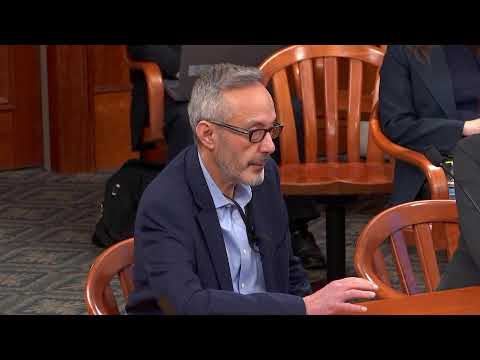
Dr. George Mellows, deputy director for State Hospitals Administration (who also described his position as the statewide superintendent of state hospitals), outlined facility capacity and wait‑list data. He said the four state hospitals are: Caro Psychiatric Hospital (a new facility opened about two years ago, housing about 100 patients); Kalamazoo Psychiatric Hospital; Walter Reuther (a combined adult/child facility serving southeast Michigan); and the Center for Forensic Psychiatry (CFP) in Saline, which handles forensic evaluations and care statewide.
Mellows said last year the hospitals recorded 669 admissions and 678 discharges—about 1,400 patient movements total—and that current wait lists include 23 people on the probate (non‑forensic) wait list (five adults and 18 children) and 252 people on the forensic evaluation wait list. He described the forensic wait list as including people in jail and people on bond. "We have worked diligently at reducing the probate wait list adults from about 60 to where it's at today," Mellows said, adding that children's wait lists remain a challenge.
On the Northville project, Mellows said the state secured a $325,000,000 appropriation in FY2022 for design and construction and a further $51,000,000 appropriation in FY2024 through the Department of Technology, Management & Budget (DTMB). Demolition of the old Hawthorne Center was finished in December 2023 and construction began at about the same time, he said. MDHHS expects DTMB to turn the building over to MDHHS in June 2026, with staff training and an anticipated move around Oct. 30, 2026.
The new building will sit on roughly 40 acres and contain 264 total beds: 192 adult beds arranged as eight adult units of 24 beds each, and 72 pediatric beds in three pediatric units. Mellows said amenities will include gym and exercise rooms, art and horticulture spaces, courtyards, and four quiet sensory rooms per unit. He emphasized that adult and pediatric spaces are physically separated.
Mellows and Eppke described renovations and maintenance at older facilities: CFP (built around 2005) is receiving kitchen upgrades and a transition from analog to digital phone service, and units have been closed temporarily to complete ligature‑risk upgrades (locks, door access, intercoms). Kalamazoo Psychiatric Hospital, with buildings constructed between the mid‑19th century and 1940, has required phased upgrades for fire suppression, asbestos abatement and ligature resistance; units have been rotated offline for work. The department said some units closed for repairs will reopen later this year, including a CFP unit that will add 34 beds when it reopens.
Committee members pressed on bed counts and staffing. MDHHS said the state currently has about 700 physical beds available but an average daily census of roughly 560; the department estimated actual need at about 750–800 beds. Mellows said the department closed some units and reduced adult census in order to accommodate youth, and he expressed hopes that reopening units and the new facility will push statewide capacity above 650 beds.
On workforce, lawmakers noted a shortfall of roughly 600 FTEs compared with historical staffing. MDHHS said the largest portion of the FTE gap is in direct care staff; contracted personnel are generally physicians and psychologists and are more costly per hour. Eppke and Mellows said recent increases in state wages (including a 5 percent bump for state employees) have improved recruitment and retention, and that the department has seen incremental increases in direct care hires.
Lawmakers also questioned how regional private psychiatric beds interact with the state system. MDHHS clarified that many patients who require inpatient behavioral health care are hospitalized in private sector psychiatric hospitals (for example, Pine Rest, Cedar Creek, UHS‑affiliated hospitals), paid for by private insurance or Medicaid, and those placements are not part of the MDHHS state hospitals budget. "Most people in emergency rooms who need behavioral health care will be hospitalized in the private sector," Dr. Mellows said.
On maintenance funding, MDHHS said many small repairs can be covered from an internal special maintenance fund, but significant structural needs sometimes require transfers, DTMB capital projects, or reallocation of vacancy savings. Committee members asked for clearer line‑item reporting; MDHHS said it will continue to provide hospital‑level reporting even as some budget lines are consolidated for administrative flexibility.
Committee members thanked MDHHS for the briefing and indicated follow‑up as they review the FY2026 budget request. "We look forward to working with you on that proposal," Eppke said.
Votes at a glance: Representative Green moved to approve the minutes of the March 11 meeting; the committee approved the motion by voice with no objection.