Get Full Government Meeting Transcripts, Videos, & Alerts Forever!
Get email alerts on the Meat Processing Wastewater topic
No spam. Unsubscribe anytime.
Small meat processors warn 2022 groundwater permit sets stricter limits that could shutter plants
Summary
Leaders of the Michigan Meat Association told the House Oversight Committee that changes in the 2022 general groundwater discharge permit imposed new numeric limits and operating requirements that present large capital and operating costs for small processors and risk local food‑system disruption.
The Michigan Meat Association told the House Oversight Committee that the 2022 revision to the state’s general groundwater discharge permit for meat processors introduced numeric limits and operating requirements that threaten the viability of small processors across the state.
Why it matters: Small processors are an important part of local food systems; association leaders said the permit imposes limits and monitoring obligations that increase capital and operating costs and could force smaller plants to close, with downstream effects on farm-to-market supply chains and community access to processing services.
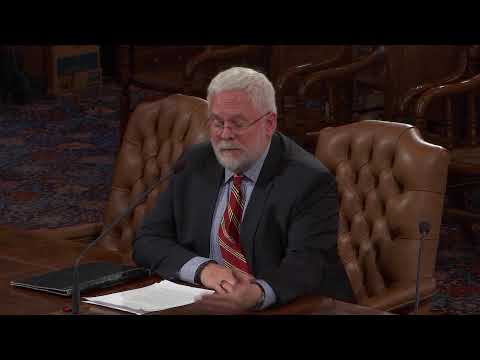
What the association presented: Carl Jones, president of the Michigan Meat Association, described three parameter changes between the 2015 and 2022 general permits that he said are the core problem: biochemical oxygen demand (BOD) limits (not regulated in the 2015 permit but set in 2022), phosphorus set at 4 milligrams per liter in 2022 (not regulated in 2015), and a lower total inorganic nitrogen limit (from 35 mg/L in 2015 to 10 mg/L in 2022). Jones compared the state’s new limits to U.S. EPA practices and questioned how the state justified the change.
Costs and grants: Jones estimated pump‑and‑haul costs his small plant pays run $800–$1,600 per week. He estimated a lagoon system installation for a small processor could cost between $600,000 and $800,000, with annual operating expenses around $70,000. Jones said MDARD offers grants that can reimburse up to 50% of construction costs but that processors must build and operate the facility and then wait for confirmation of compliance before being reimbursed — a financial hurdle many small processors cannot meet.
Local impacts: Jones told the committee the permit’s cost and timing consequences could eliminate small processors that supply local farms, schools and 4‑H projects. He said that when large packers shut during the COVID‑19 pandemic, small processors kept supply chains functioning, underscoring the sector’s role in food resilience.
Next steps: Committee members asked whether MDARD grants were being used and whether there was an explanation for the permit changes; Jones said some processors had applied for grants but he could not provide exact receipts or timelines and that “as far as I know, no explanation” for the specific numeric changes had been offered.
Speakers quoted in this story are identified in the transcript and appear in the speaker list below.