Get Full Government Meeting Transcripts, Videos, & Alerts Forever!
Get email alerts on the Local Budget Cip topic
No spam. Unsubscribe anytime.
County budget director outlines $29.6 million CIP shortlist; commissioners press for clearer links to comprehensive plan and transportation needs
Summary
Budget director Jamie Provoznak presented a proposed 10-year capital improvement plan (CIP) shortlist of 21 projects totaling about $29.6 million. Commissioners pressed staff for clearer alignment with the 2040 comprehensive plan, more public involvement, and better context on funding options for roads and major projects.
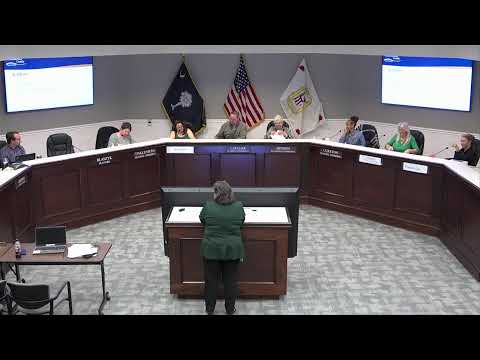
Lancaster County’s budget director presented a revised 10‑year capital improvement plan (CIP) summary to the Planning Commission and asked the commission to review the project list ahead of an April public hearing and prioritization exercise.
Jamie Provoznak, Lancaster County budget director, outlined a portfolio of 21 projects with a combined, quoted cost of approximately $29.6 million. The list included roughly $19 million in public safety projects (new or renovated EMS and fire facilities and apparatus) and about $10.6 million in general-government requests (enterprise resource planning software, parks projects, fleet/site studies, and a Joshua Tree convenience site). Five projects already appear in the current CIP but lack identified funding; 16 are new requests submitted by department heads.
Provoznak described the CIP as a financial-planning tool that is revised annually and clarified that adopting projects in the CIP is not the same as appropriating funds; council appropriation (typically in June) creates the actual funding commitment. She described typical funding tools (bonding, installment purchases, millage, impact fees, fund balance, and capital project sales tax) and said staff will present more detail at the April workshop and public hearing. She also said the county is exploring a transportation plan and noted that concurrency (a test tying development approvals to available infrastructure) is not currently codified at the county level.
Commissioners raised several process and priority concerns. Several said they expected the planning commission to be more involved earlier and to see CIP requests aligned with the 2040 comprehensive plan goals rather than presented as a staff-submitted laundry list. Commissioner Tinklenberg urged a more proactive approach to solve countywide problems rather than reacting to departmental request lists. Other commissioners asked for project scope sheets, fund-balance context and limits, and clearer linkages showing how each CIP project advances comprehensive-plan objectives. Several also pressed for information on how road and transportation projects are funded; staff noted the county uses road-improvement fees, state paving programs and capital projects sales tax, but said needs exceed available funds.
Several commissioners recommended creating a planning-commission CIP subcommittee and requested staff provide scope sheets for each project, a crosswalk showing which comprehensive-plan goals each project advances, and a clearer description of available funding sources and fund-balance constraints. Staff agreed to supply project scope sheets and return in April with a prioritization exercise and an opportunity for the commission to recommend a prioritized list of projects to county council as part of the FY26 budget cycle.
No formal action was taken; the CIP presentation was informational. Staff invited commissioners to the April 15 public hearing and prioritization exercise.