Get Full Government Meeting Transcripts, Videos, & Alerts Forever!
Get email alerts on the Digester Regulation topic
No spam. Unsubscribe anytime.
Generate Upcycle says Fremont anaerobic digester closed after years of disputed enforcement by EGLE
Summary
Generate Upcycle told a Michigan House committee that regulatory actions and rule reinterpretations by the Michigan Department of Environment, Great Lakes and Energy (EGLE) forced permanent closure of its Fremont anaerobic digestion facility, costing the company a $25 million investment and dozens of local waste-management customers.
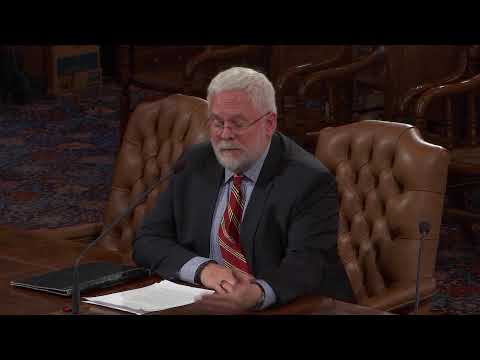
Generate Upcycle’s vice president of operations told the Michigan House Committee on Oversight that his company permanently closed its Fremont, Michigan anaerobic digestion facility in late 2023 after protracted conflicts with the Michigan Department of Environment, Great Lakes and Energy (EGLE). Dan Masarello said the company decided to shutter the plant after repeated regulatory changes and enforcement actions made continued operation economically unviable.
Why it matters: The Fremont plant processed food and other organic wastes into renewable electricity, renewable natural gas and organic soil amendments. Masarello told the committee the facility supported local manufacturers and agricultural users, produced about 3 megawatts of distributed renewable electricity at times and employed roughly 20 permanent workers. The closure, the company says, left local businesses without a sustainable outlet for an estimated 150,000 tons per year of organic waste from manufacturing operations.
Masarello said Generate Upcycle and its parent, Generate Capital, a sustainable-infrastructure investor, operate 24 organic-waste facilities across multiple jurisdictions and process “north of 2,000,000 tons” of organic waste annually. He described years of “confusing, discouraging, frustrating, aggressive” interactions with EGLE staff across divisions, and said EGLE has at times favored landfill disposal and treated the digester’s product as industrial wastewater rather than a beneficial agricultural product.
“There were instances where EGLE temporarily revoked our permit to operate or to land apply in roughly the last two weeks of the season,” Masarello told members. He added that EGLE eventually reinstated permits in two such cases after investigations found no evidence of wrongdoing, but that the financial damage had already been done because the company could not manage material economically for the remainder of the land-application season.
Masarello described a regulatory shift in Michigan away from the agricultural use authorization (AUA) framework toward a groundwater discharge permit approach. He told members that EGLE’s proposed transition would effectively require treating digestate to near‑drinking‑water quality before land application, an outcome he said would eliminate the product’s value as a fertilizer and make continued operations uneconomic. He said the new framework would shrink the acreage where material could be applied by “anywhere from 60 to 80%” through disqualifying criteria and impose limits such as a BOD-per-acre-per-day cap that would force repeated passes across fields and increase costs.
Committee members pressed Masarello on technical questions. Representative Cara asked whether EGLE had presented scientific findings that the Fremont facility’s product directly degraded groundwater; Masarello answered, “No. They did not.” Representative Wigala asked whether the company had received government subsidies; Masarello said he did not believe the Fremont facility had been subsidized.
Masarello also recounted what he described as instances of staff behavior he found intimidating or unprofessional, including an inspection in February 2019 he said placed the site manager in an adversarial encounter with a resident rather than allowing a site visit. He said focus-group records from a part 115 rule update referenced Fremont in a way that suggested staff did not want additional facilities like it to be built in the state.
Masarello described the economic stakes: Generate Upcycle wrote off what he said was a $25,000,000 investment tied to the facility, laid off roughly 20 employees after the closure and shelved other Michigan investments because of “instability and unpredictability” in the regulatory framework. “It was abundantly clear from that early on the project’s ability to apply as we had previously known it…was in jeopardy,” he said.
What was not decided: The hearing was a fact-finding and testimony session; the committee did not make a formal finding or vote. Masarello’s account presents the company’s perspective and cites specific operational impacts, but it represents one side of a regulatory dispute; EGLE did not appear at this hearing to respond.
Outlook: Masarello said the company evaluated alternatives, including building full wastewater treatment at the facility, and concluded capital expenditures would be “in excess of $10,000,000” with potential operating costs doubling — a level of investment Generate Upcycle considered infeasible for the Fremont site under the new regulatory interpretation.
Speakers quoted in this story are identified in the committee transcript and appear in the list of speakers below.