Get Full Government Meeting Transcripts, Videos, & Alerts Forever!
Get email alerts on the Roadmap 2030 topic
No spam. Unsubscribe anytime.
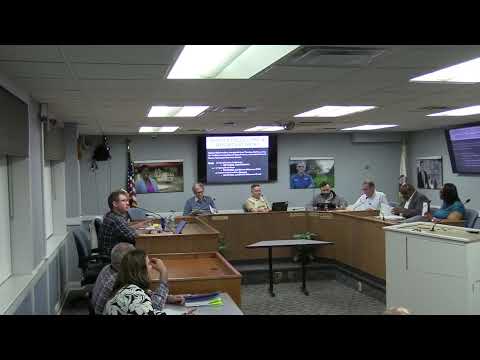
Roadmap 2030 plan draws fierce public pushback over Johns Hill ESL, staffing and timeline
Summary
Decatur Public Schools’ Roadmap 2030 planning process drew sustained public criticism Tuesday, with parents, teachers and union leaders urging the board and administration to pause proposals to reconfigure school attendance centers and focus first on teacher shortages, staff retention and academic supports.
Decatur Public Schools’ Roadmap 2030 planning process drew sustained public criticism Tuesday, with parents, teachers and union leaders urging the board and administration to pause proposals to reconfigure school attendance centers and focus first on teacher shortages, staff retention and academic supports.
Speakers at the March 18 board meeting repeatedly said a scenario under consideration—shifting to pre-K–2 and 3–5 attendance centers and creating three magnet-themed 6–8 middle schools—would disperse services for English learners and weaken programs that currently operate successfully at Johns Hill Magnet School.
Why it matters: dozens of speakers told the board that breaking up Johns Hill’s K–8 English as a Second Language (ESL) program would separate students from bilingual teachers, social workers and on-site supports and reduce instructional cohesion for a large population of English learners. Several speakers said those changes would risk reversing academic gains and further stress already strained staffing.
Board discussion and community concerns Administrators leading Roadmap 2030 presented the draft vision, a balanced scorecard of academic indicators and a facility-use scenario the district is running as a “proof of concept.” Doctor Marino and facilitator Ashley said the committee’s work was intentionally wide-ranging so the board could later weigh recommendations. Dr. Marino told the board, “If we always do what we’ve always done, we’re gonna get what we’ve always got,” arguing the district needs options to improve long‑term results.
But community members and many board members said the committee has moved too quickly and has not yet answered how the proposals would protect daily instruction, the bilingual workforce and families who depend on neighborhood and magnet arrangements. Sam Mills, president of the Decatur Education Assn., told the board that teachers feel “unheard and unvalued” and warned that shuffling staff and students without clear safeguards will worsen the district’s chronic vacancy problem.
Parents and teachers who spoke at public comment described Johns Hill as a stable K–8 program with concentrated bilingual and ESL expertise: “ESL students account for 33% of our student population at Johns Hill,” said one teacher who testified (reading a statement submitted by a colleague). Multiple speakers said Johns Hill currently houses bilingual social work, parental liaisons, IEP interpreters and a cluster of staff with bilingual endorsements, and they warned those bundles of services would be hard to recreate across many buildings.
Board members pressed administrators about process, membership and timing. Several members asked how many teachers serve on the roadmap steering committee; the administration said roughly eight teachers among 57 committee members. Board members also raised the district’s impending leadership transition and an upcoming school board election as reasons to reconsider rushing decisions during a “lame duck” period.
What administrators proposed Roadmap facilitators described two near-term deliverables: (1) a five‑year strategic plan with mission, vision and goals and (2) a balanced scorecard of measurable indicators the board can use to track progress. A third deliverable—a master facilities plan tied to reconfiguration scenarios—may be delayed at the board’s direction. The facility scenario under discussion would retain two high schools but shift elementary grouping and create three theme-based middle schools (for example, fine arts, STEM and CTE) so more students would access newer buildings and magnet options.
Administrators emphasized that the reconfiguration is a concept being “proofed” with staffing, facilities and financial experts; they said no final decisions have been made and that any recommendation will come to the board for approval.
Discussion vs. decision At the close of the discussion, the board did not adopt any facility reconfiguration. Several board members asked administration to return with clearer priorities and requested that the board consider decoupling the facility recommendations from the strategic-plan deliverables so the district can concentrate first on academic improvement and staffing strategies.
Voices and details - Teachers, parents and union leaders asked the board to keep the Johns Hill K–8 ESL program intact, citing concentrated bilingual staff (including bilingual‑endorsed teachers and bilingual special‑education support) and the program’s role serving families who speak 13 languages. - Union leaders and teachers said teacher vacancies and the substitute shortage are recurring daily operational problems; they recommended targeted solutions such as improved mentoring, differentiated professional development, and better staff recruitment and retention plans. - Administrators said the district is losing roughly 120 students per year and that existing high‑school square footage is overbuilt for current enrollment, which is a factor driving facility analysis.
What’s next Administrators said deliverables 1 and 2 (strategic plan and balanced scorecard) are on track for April; the facilities master‑plan timing is still under discussion. Multiple board members asked for more time and suggested pausing the facility component or delaying final recommendations until after the upcoming board election and the incoming superintendent’s orientation.
Ending: The Roadmap 2030 process remains ongoing; the district has two additional community meetings scheduled and administrators agreed to return with clearer staffing, academic and timeline details to address the concerns raised Tuesday.