Get Full Government Meeting Transcripts, Videos, & Alerts Forever!
Get email alerts on the Municipal Finance Budgets Votes topic
No spam. Unsubscribe anytime.
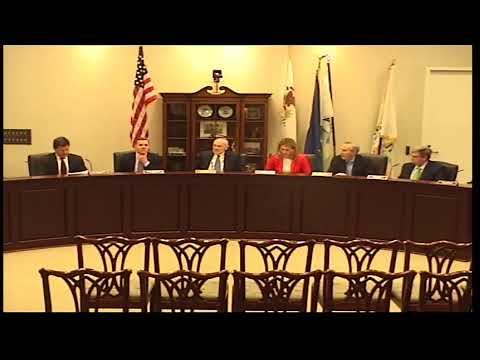
Trustees approve accounts payable, consent items and annual appropriation ordinance
Summary
At its March 18 meeting the HIMSA Board of Trustees approved payment of accounts payable totaling $1,130,083.67, approved consent agenda items 7B–7I, and adopted the annual appropriation ordinance for 2025; all votes were roll-call approvals with no recorded no votes.
The HIMSA Board of Trustees on March 18 approved three agenda items by roll call: payment of accounts payable totaling $1,130,083.67 for the period March 5–18, 2025; consent-agenda items 7B through 7I; and the annual appropriation ordinance for Jan. 1–Dec. 31, 2025.
Accounts payable: A trustee moved to approve payment of accounts payable for the period of 03/05/2025 through 03/18/2025 in the aggregate amount of $1,130,083.67 as set forth on the list provided by the village treasurer. The motion was seconded and passed on a roll-call vote.
Consent agenda: Trustees moved and seconded approval of consent agenda items 7B through 7I; the motion passed on a roll-call vote.
Appropriations ordinance: The board conducted a second read of the annual appropriation ordinance required by Illinois state law, noting that the ordinance increases each budget line item by 25% for appropriation purposes with a 5% contingency for general-fund departments and a 10% contingency for other funds; the library board sets appropriations for the library portion. A trustee moved to approve the annual appropriation ordinance for Jan. 1, 2025, through Dec. 31, 2025. The motion was seconded and approved on a roll-call vote.
Roll-call tallies recorded “Aye” responses from trustees during each vote and no “No” votes were recorded in the transcript. The transcript did not specify the mover or seconder by name for every motion; motions were recorded and carried by roll call.