Get Full Government Meeting Transcripts, Videos, & Alerts Forever!
Get email alerts on the Business Regulation Secondhand Sales topic
No spam. Unsubscribe anytime.
Mesa staff propose narrower secondhand-dealer license requirement for short vendor markets
Summary
City staff recommended removing the secondhand-dealer licensing requirement for vendors who only sell (not purchase) used or vintage goods at short-term markets, leaving tax reporting and police reporting requirements intact.
Mesa — City staff told council on March 17 they plan to amend the city’s secondhand-dealer licensing rules so temporary vendors and pop-up markets that only sell used or vintage items would not need a secondhand-dealer license.
Leanne Cardenas, assistant director for business services, told council the change would allow downtown businesses and antique-mall operators to host one‑day vintage markets without requiring every vendor to complete background checks and fingerprinting. “If they’re only here selling items and not purchasing from the general public, they won’t need a secondhand license,” Cardenas said.
The nut graf: the proposed change keeps the licensing requirement focused on purchases from the public — the city’s primary tool for tracking potentially stolen goods — while reducing licensing costs and administrative burdens for short-term sellers.
Staff said vendors would still need a transaction-privilege tax license and must report and remit Mesa sales taxes. Cardenas said the secondhand-dealer license’s main purpose is to require dealers who buy goods from the public to file police reports when items appear stolen. “The main reason for the secondhand license is to report when they purchase goods to make sure they’re not stolen,” she said.
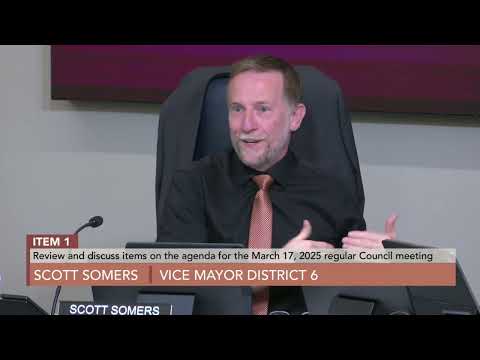
Vice Mayor Summers asked whether Mesa Police Department had reviewed the change; Cardenas said Mesa PD had input and “Yes” in response to the question. Councilmembers praised the change as a way to encourage small, short-term markets without creating enforcement gaps; staff emphasized that dealers who purchase used goods from the public would remain subject to the background checks and reporting requirements attached to the secondhand license.
Ending: The item was presented for review at the study session; no formal council vote occurred at this meeting. Staff indicated the ordinance language will return to a public meeting for formal action.