Get Full Government Meeting Transcripts, Videos, & Alerts Forever!
Get email alerts on the Strategic Planning topic
No spam. Unsubscribe anytime.
MMSD staff: new strategic framework will set vision, mission and measurable goals; board to review draft in May
Summary
District staff and consultants told the board the Madison Metropolitan School District’s strategic-framework process is gathering input from more than 600 stakeholders and will present draft vision/mission and measurable goals for board review in May, with tentative approval scheduled for June.
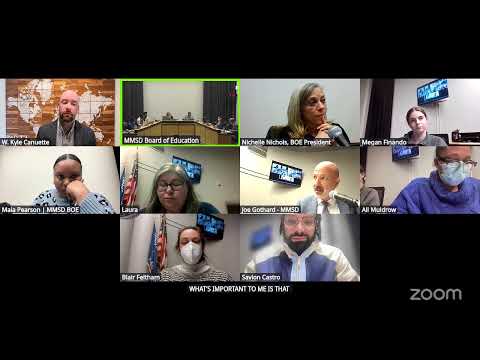
District staff and consultants presented an update on development of a new strategic framework at the March 17 Madison Metropolitan School District Board of Education meeting, saying the process aims to produce a clearer, more actionable plan with measurable goals.
Doctor T.J. McCray, director of the strategic planning effort, said the project has convened a steering committee of more than 80 stakeholders and held more than 32 focus groups that have gathered input from over 600 people. RTI, a national consultant the district hired, will help the district build a plan with four to six focus areas, “guiding commitments” in place of traditional core values, and three to five SMART goals that are specific, measurable, actionable, realistic and time-bound.
Kyle (RTI consultant) said the draft plan will separate board-level foundational elements — vision, mission, guiding commitments and top-line goals — from implementation details such as focus-area strategies and metrics that the superintendent and staff would finalize. The plan’s foundations are slated for board input and final approval; the implementation elements will have board input and will be approved administratively to allow the superintendent and staff to align operational plans.
Timeline
Staff said they will complete a first phase of community input in early April, prepare draft foundations and solicit steering-committee and community feedback, then present a full draft to the board for initial feedback at the May 19 meeting with tentative approval at the June 23 meeting. Full districtwide implementation is planned for the 2026–27 school year, with partial pilots or phased actions beginning during 2025–26 to avoid delaying planning already underway for next year.
Board members asked how the new framework will bridge to existing metrics used for continuous improvement and state assessments; consultants said they will design measures and implementation guidance to preserve useful historical measures where appropriate and to provide continuity during the transition.
Ending
Board members and staff emphasized the need to involve students and educators in both drafting and implementation and the desire to avoid “initiative churn” by keeping the new plan long-lived and adaptable. The board will receive materials for review in May and consider tentative approval in June.