Get Full Government Meeting Transcripts, Videos, & Alerts Forever!
Get email alerts on the Sidewalks topic
No spam. Unsubscribe anytime.
Grandview Heights council certifies sidewalk compliance list, amends payment language; second sidewalk measure not converted
Summary
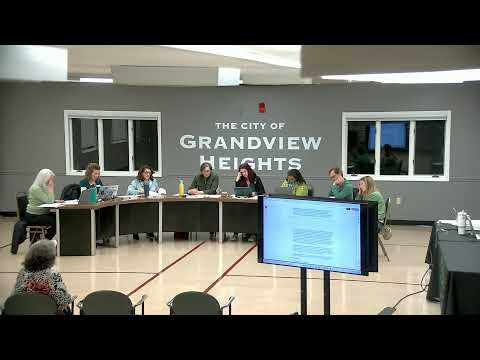
Grandview Heights City Council approved a resolution on March 17 to certify a list of sidewalks for repair and to allow city staff to notify property owners and begin contractor work once notices are mailed.
Grandview Heights City Council approved a resolution on March 17 to certify plans, specifications and cost estimates for identified sidewalk repairs and to allow the city to notify property owners and proceed with work consistent with state law.
The action followed extended public comment and council discussion about program timing, contractor bidding, notification and the ability of homeowners to spread payments. Council also approved an amendment to the related second ordinance to add language that any assessment placed on property tax bills may be paid “over an extended period of time as may be determined by council.” A separate motion to convert that second ordinance to a resolution failed and a later motion to suspend the rules and pass that ordinance in a single reading also failed on roll call.
The certified measure (recorded in the meeting as O4) will allow the director of building and zoning to send letters to property owners showing a photo of impacted panels, the estimated cost and a timeline; property owners will be asked to respond and may either hire their own contractor or participate in the city program using the city’s bid price. Council members and staff said letters will include a photo from the GIS system, the cost for the work, and instructions for paying either up front or by having the amount assessed on the owner’s property tax bill.
Director Hughes, the city’s building and zoning director, described the program as “kind of a standard program — all municipalities in Central Ohio across Ohio use” and said the contractor bid process and vendor business cycle drive the timeline that makes swift action desirable. He and mayoral staff said the city budget included roughly $100,000 for sidewalks this year to fund the program, engineering and project oversight.
Public commenter Eric (in attendance) asked that the council consider payment plans for residents on fixed incomes. Eric said the person he was representing was “on a fixed income” and asked whether the city could offer a payment plan rather than an upfront bill of “over $2,000.” Council members and staff repeatedly said the city intends to allow assessment spread over time; staff noted past assessments have typically been spread over five years and gave an example that a $2,828 assessment would equate to about $47 a month if spread over five years.
Council debated timing and public notice. Several council members urged more time and more outreach; others said delaying would push work into a later construction window and could increase cost. Councilmember Weiss moved and councilmember Smith seconded an amendment to the second sidewalk ordinance (filed in the packet as 2025-05a) to add a whereas clause clarifying the city’s intent to allow assessments to be paid over an extended period. The roll call on that amendment recorded the following votes: Houston — Yes; Kozak — Yes; Smith — Yes; Walker — Yes; Weiss — Yes; President Keeler — Yes. The amendment carried.
Council then took separate procedural votes on whether to convert the first sidewalk ordinance form to a resolution and to approve it. The body voted to convert and approve the first measure (listed in the meeting materials as 2025-04) so letters may be sent and work can proceed; the roll call on conversion recorded members voting in favor and opposing members as recorded in the official minutes. A later motion to convert the second sidewalk ordinance (2025-05a) to a resolution failed on roll call, and a subsequent motion to suspend the rules for that second ordinance also failed.
Staff said the practical sequence is: (1) certification of the list by council; (2) letters to property owners showing affected panels and cost; (3) owners may respond and choose the city-contracted work or hire their own contractor (contractors must be registered with the city); (4) if owners do not complete the work by the internal deadline (staff said a likely deadline would be in August), the city may undertake the work and later assess the cost to the properties. Staff emphasized that the 30‑day item in one draft referred to the owners’ response window, not the time to complete physical work, and that the council could direct a longer response window in the mailed letters.
Council and staff gave several specific details during the discussion: the city’s 2024, citywide sidewalk condition study was completed by EP Ferris; the city obtained concrete pricing as a bid alternate through the annual street bid; staff reported a unit price this year of roughly $16.16 per square foot for concrete work; the program budgeted roughly $100,000 this year to support sidewalk repairs and related engineering and management costs; the compiled list of proposed repairs in the packet totaled about $76,000 in estimated repair costs, with roughly $25,856 attributed to single‑family properties. Staff said grinding operations performed earlier do not use this same budget and are not charged to owners.
Council members and staff said the city will post explanatory materials on the Growing Together website, will include contact information in each letter for owners to request a site review, and will allow follow‑up inspections if an owner disputes an identified slab. Director Hughes said contractors now commonly recycle removed concrete.
The council recorded motions, roll calls and amendments in the March 17 meeting minutes; staff noted that letters cannot be mailed until council completes the certification step. The council recorded the sidewalk certification as a legislative action and indicated the program will proceed once mailing and contractor scheduling are complete.
Votes at a glance: - Amendment to 2025-05a (add language allowing assessments to be paid over an extended period as may be determined by council): passed on roll call (Houston, Kozak, Smith, Walker, Weiss, President Keeler — Yes). (Amendment mover: Councilmember Weiss; second: Councilmember Smith.) - Conversion and approval of the first sidewalk measure (2025-04) to permit certification and mailing of notices: approved by council (roll calls recorded in the minutes). - Motion to convert 2025-05a to a resolution: failed on roll call. - Motion to suspend the rules and pass 2025-05a in a single reading: failed on roll call.
The director said that work could begin approximately 30 days after letters are mailed to owners who opt into the city-contracted program, subject to contractor scheduling and weather. The council did not change the basic allocation method in the code; instead it certified a list, approved a resolution to permit notice and start work, and added language clarifying payment‑assessment flexibility.