Get Full Government Meeting Transcripts, Videos, & Alerts Forever!
Get email alerts on the Zoning In Family Conveyance topic
No spam. Unsubscribe anytime.
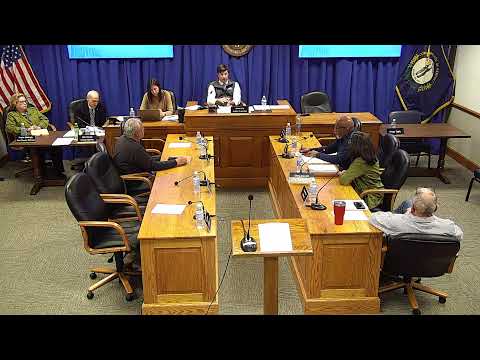
Woodford County committee outlines tighter rules for in‑family conveyance, recommends review by full fiscal court and planning commission
Summary
The Woodford County Fiscal Court Ordinance Committee on a special meeting day discussed proposed changes to Articles 2 and 7 that would tighten in‑family conveyance rules — requiring county residency, minimum parcel sizes, an affidavit of farming, a 15‑year hold period and a public‑road location for conveyed lots — and agreed to forward a recommendation to the full fiscal court and the Planning Commission for formal drafting and hearings.
The Woodford County Fiscal Court Ordinance Committee on a special meeting day discussed proposed changes to Articles 2 and 7 of the county zoning ordinance that would narrow how property may be transferred under the county’s in‑family conveyance rules and change rural residential lot standards.
The committee concentrated on a package of recommendations to return to the Planning Commission for formal drafting and public hearings. The changes the committee agreed to pursue include: requiring the in‑family conveyance applicant to be a Woodford County resident; requiring a Planning and Zoning–approved affidavit stating that farming is occurring on conveyed parcels; keeping the primary farm parcel at no less than 30 acres; allowing one in‑family conveyance for primary parcels of 35–49 acres and two for parcels of 50 acres or more; setting a minimum conveyed parcel size of five acres located on a public road; and requiring both the primary and conveyed parcels be held by the parties involved for 15 years, with sale before that only by judicial action (death, foreclosure or similar court order). The committee also discussed recording the restrictions on both the plat and deed and starting the 15‑year period upon deed recordation.
"Since the Planning Commission requested a moratorium and we turned it down, there have been dozens of small lots carved up in the county," Squire Gil, a member of the ordinance committee, said, urging the panel to expedite a recommendation. Gil proposed the residency, affidavit and size limits to preserve farmland and reduce speculative subdivision activity.
Committee members debated details and tradeoffs. Squire Blackford supported retaining the 30‑acre minimum for the primary parcel and suggested allowing adopted children to be eligible recipients in the conveyance language. "I think it's very important that we keep that 30 acre family conveyance," Blackford said. Gil and other members discussed whether the conveyance recipient language should use "legal child" or "descendant"; assistant county attorney Mr. Kennedy cautioned the committee that wording matters because terms such as "heir," "descendant" and "family member" have different legal effects.
On minimum conveyed parcel size, the committee settled on five acres as a floor, citing state definitions and local practice. "The conveyed parcel may not be less than 5 acres because by law in Kentucky, 5 acres is a farm," Squire Gil said during the discussion. Committee members noted that the five‑acre threshold is intended to preserve agricultural use and reduce the number of small, non‑farming lots sold into the market shortly after creation.
The committee also discussed how rural residential and in‑family conveyance mechanisms interact. Planning staff and committee members said rural residential subdivisions — which require infrastructure and typically limit development to preserve roughly 80% of farmland as rural residual — operate under different rules than in‑family conveyances and generally cannot be combined on the same tract once residual farmland is designated.
Planning director Kurt (Planning and Zoning) described administrative challenges tracking historical development rights using 1990 paper maps and digital systems. "It is very, very, very challenging to track," he said, noting staff must cross‑reference paper maps with GIS to determine what development rights remain on a parcel.
Committee members proposed procedural protections to reduce post‑platting circumvention. Several participants recommended both the plat and the deed show the in‑family conveyance restriction so title examiners and buyers can see limits when they perform title searches. "Every deed I prepare that has an in‑family conveyance element to it, I put that language," a title‑practicing participant said, urging deed recordation as an extra protection.
No formal ordinance vote was taken by the committee. Members agreed that the committee should finalize a recommendation in time for the Planning Commission’s advertised hearing schedule; they also agreed the full fiscal court should review and formally adopt any recommendation. The committee scheduled follow‑up work and a committee agenda for Tuesday before the fiscal court meeting so the full court could review the proposed language before it goes to Planning and Zoning.
The discussion included repeated cautions about unintended consequences. Long‑serving members warned that prior text amendments and past practices had broadened the in‑family conveyance use beyond original intent, and they urged precise statutory language so the county does not revive loopholes such as interspousal transfers designed to convert conveyance lots into marketable property.
The committee’s proposed elements, as summarized at the meeting, were: - Applicant must be a Woodford County resident. - A Planning and Zoning–approved affidavit must be completed stating farming is occurring on the conveyed parcel(s). - The primary farm parcel may not be reduced below 30 acres; in‑family conveyance is only available for primary parcels of at least 35 acres (one conveyance for 35–49 acres; two for 50+ acres). - Conveyed parcels must be at least 5 acres and located on a public road. - Both primary and conveyed parcels must be held by the conveyance parties for a minimum of 15 years, transferable earlier only by judicial action (death, foreclosure, etc.). The committee recommended recording restrictions on both the plat and deed and starting the 15‑year clock on deed recordation.
The committee directed staff to prepare formal language and recommended the ordinance committee present the draft to the full fiscal court for a formal decision and then forward it to the Planning Commission for public advertising and a hearing. No formal motion was recorded in committee during the meeting; members agreed the fiscal court should take a formal vote at its next meeting after the committee finalizes the draft.
The committee adjourned after scheduling the next ordinance committee work session and leaving the draft recommendations for the full fiscal court and Planning Commission to refine and pursue through the public hearing process.