Get Full Government Meeting Transcripts, Videos, & Alerts Forever!
Get email alerts on the Alcohol Licensing topic
No spam. Unsubscribe anytime.
City council narrows church-distance rule for liquor licenses after heated public hearing
Summary
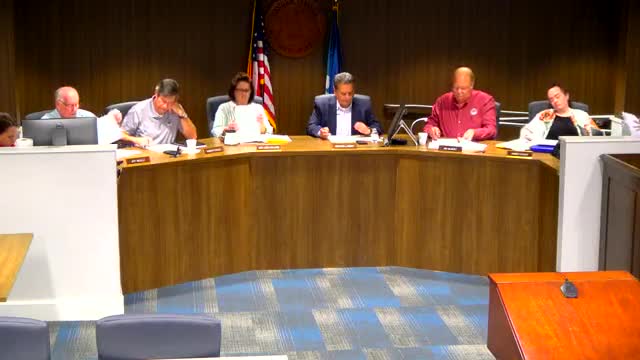
Denham Springs — The city council on March 2025 voted to amend section 10‑102 of the Denham Springs Code of Ordinances to change how the 300‑foot restriction on premises licensed to serve alcohol is applied to houses of worship.
Denham Springs — The city council on March 2025 voted to amend section 10‑102 of the Denham Springs Code of Ordinances to change how the 300‑foot restriction on premises licensed to serve alcohol is applied to houses of worship.
The amendment inserts language limiting the distance protection to buildings "exclusively used as a church or synagogue," rather than to any property that houses religious activity. Councilmember Gilbert moved to adopt the ordinance amendment; Councilmember Poole seconded. The motion passed on a 3‑2 vote.
The change drew more than an hour of public comment during a packed hearing. Local business owners said the city’s current wording creates uncertainty that discourages restaurant investment in the downtown antique district. Tim Laverne, a Denham Springs resident, told the council the revision would "restore the intent of the law to protect the church with clear language" and remove "unnecessary barriers to small business growth." John Cavalier, who owns a downtown business, said clarity will help prospective owners and investors.
Opponents, including several pastors and long‑time residents, said the amendment would effectively erase the 300‑foot protection unless churches stop hosting community activities. "The church is the only place where we can come to lean on our moral compass," said Reverend Deborah Kellen of Roberts United Methodist Church. She warned that removing the broader protection could "harm our community by lifting the 300‑foot rule as it relates to alcohol and the church."
Multiple speakers described a concrete local dispute: a downtown restaurant that has hosted a small congregation on Sundays lost a license renewal when staff determined the building was being used for religious services. Representatives for the business said they allow the congregation to meet for free while operating as a restaurant during the rest of the week; they argued the city’s current wording led officials to treat the business as a church for licensing purposes. A restaurant representative said, "The fact that a church meets in our building on Sundays doesn't make us a church."
City staff and the city attorney explained the amendment would make the municipal code language consistent with state licensing language, which uses the term "exclusively used" in similar provisions. Staff cautioned that, in litigation, judges could construe proximity rules differently; one staff member said the change "may invite future requests" to alter protections for playgrounds, libraries and schools, though the amendment itself does not change the 300‑foot distances for those uses.
Council discussion emphasized competing priorities: maintaining neighborhood protections that residents said were adopted after crime and nuisance problems in the 1990s, versus eliminating ambiguity that some local businesses say prevents downtown revitalization. Councilmembers who supported the amendment said it preserves the 300‑foot rule while allowing restaurants that are primarily commercial to operate and host community groups. Those opposed said the amendment could force many churches to stop hosting community activities if they wish to retain the 300‑foot protection.
The ordinance was adopted after the vote; the council did not provide an effective date as part of the motion. Several residents asked the council to consider alternative wording — for example, using "primarily used as a church" instead of "exclusively" — but no amendment to the ordinance language was offered at the meeting.
Votes at a glance
- Adopt ordinance amending Section 10‑102 (alcohol‑licensing proximity wording): Motion by Councilmember Gilbert; second Councilmember Poole. Vote: Dugas — No; Gilbert — Yes; Lamb Williams — No; Poole — Yes; Wesley — Yes. Outcome: approved. - Approve minutes of February 2025 council meeting: Motion by Wesley; second by Duvall. Outcome: approved (roll call recorded as yes votes). - Approve consent agenda (period 02/01/2025 through 02/28/2025): Motion by Gilbert; second by Lamb Williams. Outcome: approved (roll call recorded as yes votes). - Introduce ordinance and authorize public hearing to amend planning/field process (hearing set for April 2025): Motion and second on the floor; outcome: authorized. - Authorize mayor to enter joint agreement for hotel occupancy tax collection per ordinance 25‑01 (Jan 2025): Motion by Gilbert; second; outcome: authorized. - Declare surplus and dispose of dump truck VIN 1HTSHAAR51H401876: Motion by Lamb Williams; second Gilbert. Outcome: approved. - Approve proposed dumpster rate adjustments for city departments (estimated annual savings $8,157): Motion by Gilbert; second; outcome: approved. - Proclamations: March 2025 proclaimed Flood Awareness Month; April 2025 proclaimed Fair Housing Month: adopted by voice vote.
Why it matters
The change alters the local test for when a church’s building is protected from nearby on‑premises alcohol licenses. Supporters say aligning local code with state wording reduces legal ambiguity and helps downtown economic activity; opponents say the practical effect will be to remove neighborhood safeguards unless churches forgo hosting community events. Several speakers urged the council to weigh protections for children and vulnerable residents against downtown economic goals.
What’s next
The revised ordinance will be part of the municipal code going forward; councilmembers and staff suggested additional questions about enforcement, licensing procedures and whether future clarifying language (such as using the word "primarily") should be considered. The council did not set a separate effective date or direct staff to return with a legal‑opinion memorandum at this meeting.
(Quotes and attributions are drawn from the March 2025 Denham Springs City Council public hearing on the amendment to Section 10‑102.)