Get Full Government Meeting Transcripts, Videos, & Alerts Forever!
Get email alerts on the Land Use Easement topic
No spam. Unsubscribe anytime.
Youngsville staff to record letter saying recorded plat’s ‘proposed’ servitude change does not abandon existing access
Summary
A Youngsville property owner asked the city to correct a recorded plat that he says implies abandonment and relocation of an access servitude at 813 Yonge Street. City staff told the council a plat note alone does not legally abandon a recorded easement and said they will prepare and record a clarifying letter; no formal council vote was taken.
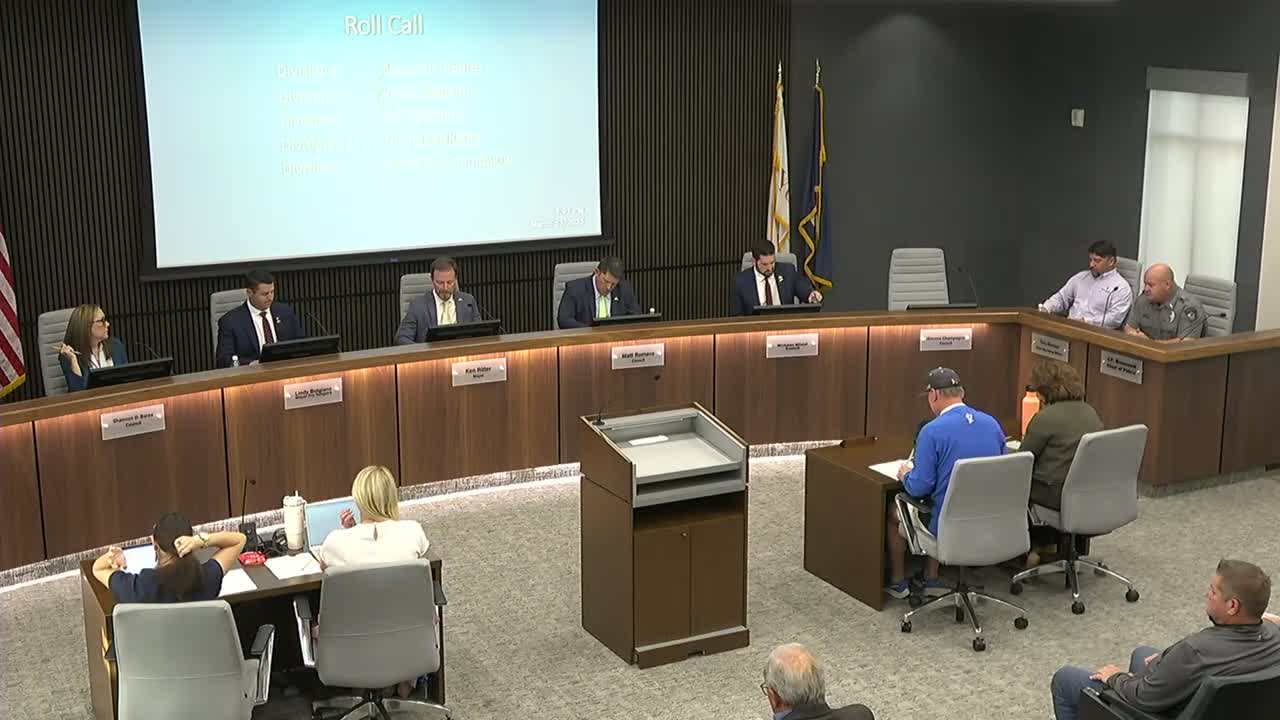
Mark Simon, a property owner affected by a plat recorded to the Clerk of Court, told the Youngsville City Council on March 13 that he opposes an implied abandonment and relocation of an access servitude shown on a recorded map for 813 Yonge Street and asked the city to document his objection before a two‑year deadline.
Why it matters: Simon said the plat’s language could be used to deny access, interfere with utility service and create confusion over who may use a recorded servitude. City staff agreed the plat’s “proposed” label does not by itself abandon a recorded easement and said they will prepare a letter for the property owner and record it with the clerk’s office to clarify the city’s interpretation.
Simon told the council he purchased the property “two years ago with all the rights, ways, privileges, and the purposes to the property,” and that he discovered after the plat was recorded that the document appears to show an abandonment and relocation of an existing access servitude. He asked the city to record a correction or margin note and to “hold on any permits applied for this designated location until all parties have reviewed and or approved any proposed projects and the necessary legal instruments have been provided in the future.”
Simon cited specific records while addressing the council: a referenced Clerk of Court map (2015‑91400) and a plat approval number (202311602) with an approval/recording date of April 19, 2023. He told the council that the recorded plat lists 17 entities as notice recipients but did not include the landowners who hold rights to the servitude.
Pam, a city permitting/planning staff member, told the council that “the mere fact that it says proposed and that it says to be abandoned doesn't mean it was actually abandoned,” and that the city had not received an easement abandonment instrument recorded at the courthouse. Pam said the correct procedural step would be for the party who submitted an incorrect plat to record an act of correction and to provide any easement abandonment or re‑establishment instruments required by law.
The council and staff discussed operational consequences. Pam noted the plat shows a 30‑foot offset to the existing servitude and warned that “a fire truck has no possible way of negotiating that kind of an angle,” meaning any practical changes would need field analysis by city engineers. Simon raised a utilities concern, saying the company SLIMCO has a 30‑foot right to run electrical service in the servitude and that moving the recorded line could prevent utility access.
Mayor (name not provided) said the city should make its interpretation clear to the property owner who recorded the plat and to the courthouse. The mayor recommended preparing and recording a letter that would state the city will not recognize the plat language as an abandonment or relocation unless the proper legal instrument is recorded. “So for you to know, we're not gonna recognize the proposed language on the plat that was recorded on this day,” the mayor said.
Council members and staff agreed that preparing and recording such a letter would be appropriate; staff indicated the action could proceed administratively and did not require a formal council motion or vote. The mayor and Pam said they would supply Simon with a copy of the letter and of the recordation once completed.
What was not decided: there was no formal council vote to approve a specific legal remedy, and no court filing or amendment to the recorded plat occurred during the meeting. Simon and his attorney will retain the right to pursue legal remedies; Simon said he was seeking public documentation of his objection ahead of the potential statute‑of‑limitations date he cited.
Next steps: city staff will draft a letter clarifying the city’s interpretation that a plat notation marked “proposed” does not, by itself, abandon a recorded easement; staff will record that letter in the clerk of court’s records and provide a copy to Mark Simon. If parties wish to effect an abandonment or relocation, Pam said they must file and record the appropriate legal instrument.