Get Full Government Meeting Transcripts, Videos, & Alerts Forever!
Get email alerts on the Urban Trees Elm Removal topic
No spam. Unsubscribe anytime.
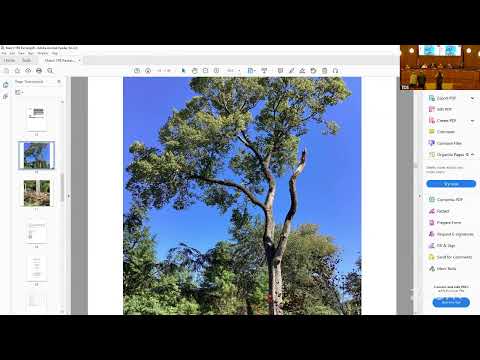
Board approves removal of 34‑inch American elm at 627 West Richardson Avenue; recommends replacement with disease‑resistant cultivar
Summary
The board granted a permit to remove a 34‑inch American elm at 627 West Richardson Avenue and strongly recommended replanting with a Dutch‑elm‑disease‑resistant cultivar; neighbors raised drainage and root‑damage concerns tied to nearby regrading.
The Summerville Tree Protection Board granted a permit to remove a 34‑inch diameter American elm at 627 West Richardson Avenue and urged the property owner to replant with a disease‑resistant cultivar.
Ash Connolly, an ISA‑certified arborist and assistant market leader for Save a Tree, represented the applicant, Andy Murphy, and presented the board with an inspection report and observations. Board members and arborists discussed structural cracks, limb failures in recent storms, and possible root damage after a neighbor’s backyard regrading.
Connolly and other arborists noted multiple transverse cracks and previous limb failures. Board discussion raised the possibility that soil compaction and altered drainage from a neighboring property had damaged the elm’s root system, allowing pathogens to enter and cause decay. One board member said the tree had been losing limbs “this past year” and cited a history of large limb failures in storms.
After discussion the board moved to grant the permit to remove the elm, with a “strong recommendation that some new cultivar of American elm be planted in an appropriate place on the property.” The motion passed by voice vote; the transcript records the motion as passing with “ayes” and does not list an opposing vote.
During public remarks and board questions, residents described chronic drainage spilling into the yard after the neighbor’s regrading and said they had reported the problem to the town; board members characterized the drainage and any neighbor excavation as a civil or stormwater issue outside the board’s direct enforcement authority. Board members encouraged the owners to work with the town to find suitable planting locations away from the wet area.
Board members and arborists suggested disease‑resistant replacements such as the Liberty Elm or Princeton Elm and said the town has been planting those cultivars on public sites. The board also urged continued review and strengthening of tree‑preservation rules during construction to avoid root damage from excavation and heavy equipment.