Get Full Government Meeting Transcripts, Videos, & Alerts Forever!
Get email alerts on the Parks Recreation topic
No spam. Unsubscribe anytime.
City staff recommends demolishing West Park bandshell and launching comprehensive redesign
Summary
City parks staff and consultants recommended demolishing the structurally compromised Bandshell at West Park and pursuing a comprehensive redesign and activation plan for the park, saying rebuilding in place would face regulatory and technical limits.
City parks staff and consultants recommended demolishing the structurally compromised Bandshell at West Park and pursuing a comprehensive redesign and activation plan for the park, saying rebuilding in place would face regulatory and technical limits.
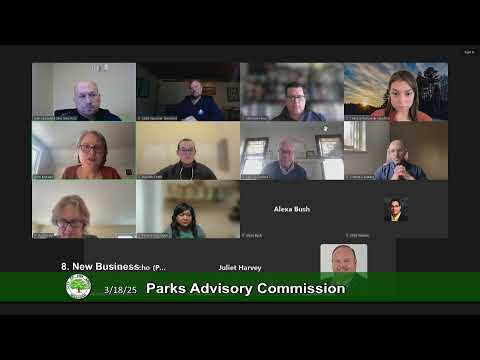
The recommendation was presented to the Ann Arbor Parks Advisory Commission by consultants from SmithGroup and city staff. "Staff are recommending instead of creating alternate concept plans … to demolish the band shell and move forward with a comprehensive plan to develop the future of West Park," a staff member said during the presentation.
Why it matters: The bandshell sits inside the floodway, which the consultants said both accelerates foundation deterioration and limits what can be built there under federal floodway rules and the city’s stormwater management goals. Because the structure and site restrict stage size, acoustic performance and ADA access, staff said the existing shell cannot meet contemporary performance and accessibility needs without major intervention.
SmithGroup senior consultant Brandon Woodall summarized engagement and technical findings. He told the commission the bandshell’s placement in the floodway is “a significant limiting factor” and that the high groundwater and active flood flows are major causes of foundation failure. Woodall said community engagement found residents value activation, accessibility and safety; benchmarking of similar projects nationwide showed many modernized venues combine infrastructure upgrades with active programming.
Staff and consultants listed specific constraints they said make repair or rebuilding in place difficult: federal regulation and city stormwater objectives restricting expansion in the floodway; a high groundwater table that would reduce the lifespan of new foundations; poor acoustics caused by echoes from nearby Miller Manor; limited ADA access because the stage area is remote from park entrances; and a wetland barrier that separates audience seating from the stage.
Consultants also summarized benchmarking examples of recent bandshell projects and renovations in other cities, noting options ranged from modest overhead-structure renovations to full replacements that created more flexible, accessible performance spaces.
Next steps and timing: Staff said they will return to the Parks Advisory Commission in May with a draft resolution recommending demolition and a path forward, and that parallel steps would begin afterward to prepare an RFP for specialized demolition and to plan community engagement on the park-level redesign. "We will be coming back to PAC in May with a full, resolution regarding this recommendation," a staff member said. Parks Manager Josh Landefeld estimated the demolition could occur "either this fall or next spring," adding that staff intend to run demolition procurement and community activation planning in parallel.
Commissioners and a council member who spoke during the discussion generally expressed support for the pivot from a bandshell-only study to a larger park redesign. Council Member Chris Watson said he and Ward 5 colleagues were "broadly in favor of this direction." Several commissioners asked how staff will preserve the public record of earlier engagement while expanding to a park-wide process; staff said they plan further rounds of outreach and to build on feedback collected to date.
What the commission decided: The presentation and recommendation were discussed but no formal vote to demolish was taken at the meeting. Staff said they will prepare a formal resolution for PAC and City Council consideration in May and will return with details including any required legal, planning and water-resource reviews.
Context and constraints noted in the meeting: the bandshell was built in the 1930s and a 2021 HRC structural analysis determined the foundations were compromised and unsafe, requiring fencing. City staff said that repair in place proved unlikely after engagement and technical review, and that moving or reusing the historic shell raised structural uncertainty and high costs.
The commission discussion emphasized balancing historic preservation with activation and stewardship of the whole park. Staff said they plan to program temporary activations during the transition to keep the neighborhood engaged while a long-term redesign is developed.
The Parks Advisory Commission meeting packet and the SmithGroup benchmarking and engagement memos were identified as public materials that will be posted to the city’s new community engagement platform.