Get Full Government Meeting Transcripts, Videos, & Alerts Forever!
Get email alerts on the Community Land Trust topic
No spam. Unsubscribe anytime.
Ann Arbor Community Land Trust asks commission for expedited approvals, fee waivers and zoning changes for permanently affordable homes
Summary
The newly formed Ann Arbor Community Land Trust (A2CLT) asked the Planning Commission to support expedited approvals, fee waivers and zoning updates — including ADU rule changes and a cottage housing ordinance — to enable delivery of permanently affordable homeownership for local workers.
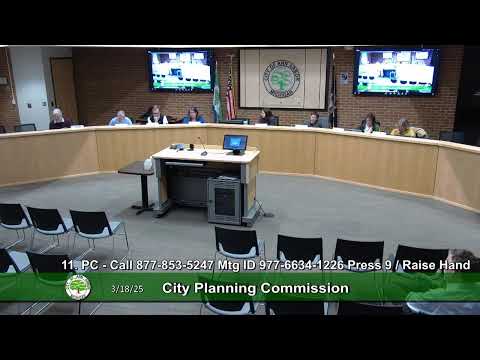
Sarah Lorenz, co‑founder and executive director of the Ann Arbor Community Land Trust, told the Planning Commission during public comment that A2CLT has acquired nine infill parcels and is ready to begin construction with contractor Norfolk Homes, but said zoning, permitting and fee barriers are delaying projects and increasing costs.
Lorenz asked the commission to support three specific reforms to help A2CLT build permanently affordable owner‑occupied homes for essential workers: (1) expedited approvals for A2CLT projects so staff review and permitting will allow occupancy within about a year; (2) fee waivers for A2CLT homes to reduce carrying costs without increasing direct city subsidies; and (3) zoning updates to allow more small affordable homes—changes to ADU rules, lot requirements, and creation of a cottage housing ordinance to enable compact, community‑oriented infill developments.
Lorenz said A2CLT had nine infill parcels and could build 25–50 homes in 12–18 months and as many as 200 homes within two years with certain planned condo developments, if regulatory and permitting barriers are fixed. She said buyer surveys show workers earning under $100,000 — and especially those under $50,000 — are currently priced out of homeownership near work.
Other public commenters, including neighborhood residents and teachers, spoke in support of A2CLT—s work and urged the commission to consider targeted tools that create pathways to ownership for local workers rather than relying solely on market‑rate development.
The request was entered into the meeting record; commissioners and staff indicated they would consider the organization—s asks as the comprehensive plan and zoning discussions proceed.