Get Full Government Meeting Transcripts, Videos, & Alerts Forever!
Get email alerts on the Comprehensive Plan topic
No spam. Unsubscribe anytime.
Planning staff outlines compressed schedule for Ann Arbor comprehensive plan; commissioners ask for more review time
Summary
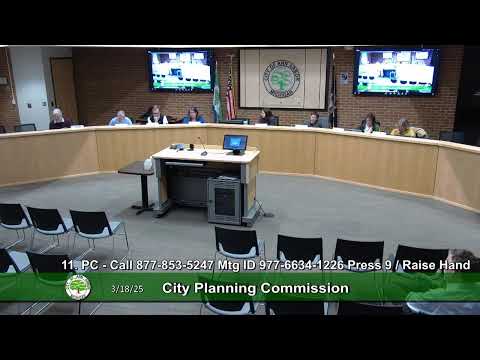
City planning staff told the Planning Commission the consultant will deliver a draft comprehensive land use plan by the end of the month, starting a two‑month review and public engagement process the commission will lead; commissioners raised concerns the review window is too tight and asked for additional meetings.
Planning staff told the Ann Arbor Planning Commission on March 25 that the consultant team is expected to deliver a draft of the city—s comprehensive land use plan by the end of the month and that staff plans a two‑month review period with the commission before the plan goes out for the state‑mandated public review.
The draft will first be reviewed internally by city departments, then shared with commissioners in May for approximately a two‑month review. Staff said it will set up a dedicated commission meeting to determine how commissioners want to structure that review and will schedule public engagement sessions in May and June. Staff expects to finalize consultant edits in mid to late June and to begin the formal distribution and two‑month public comment period in July; the goal is adoption later in 2025, with a presentation to city council anticipated in November.
Commissioners and members of the public said that timing feels tight. Commissioner Adams asked whether the commission would have a chance to review public engagement materials before sessions begin; several commissioners and public speakers urged more meetings for the commission in May and June so members can examine materials and provide substantive direction. Commissioner Mills and others suggested a calendar window tied to the city—s early technical review cycle so community participation would happen while significant design and engineering questions are still mutable, not at the very end of a long departmental review.
Manager Leonard said the plan—s contract runs through the end of the calendar year and that the schedule is intended to allow internal staff review, commission review, public engagement, and a formal distributed public comment period required under state rules. He told commissioners staff will circulate more detailed timing in the draft memorandum provided with the packet and will solicit input about meeting cadence and structure.
The discussion also touched on the steering committee the commission had previously created: staff reported it had been "sunsetted" because attendance waned, but staff will still share drafts with the volunteers and incorporate their feedback. Staff emphasized the commission will be the principal author of the plan going forward unless it delegates that role.
A number of public speakers urged the commission to slow the schedule, increase outreach to neighborhood associations and renters, and provide additional time for residents to evaluate impacts such as infrastructure capacity, stormwater, parking and tree preservation.
Looking ahead, staff reiterated the schedule is posted in the meeting packet and on the city—s comprehensive plan web pages and that the city—s GovDelivery lists and a dedicated comprehensive plan mailing list will be used to announce engagement sessions.