Get Full Government Meeting Transcripts, Videos, & Alerts Forever!
Get email alerts on the Comprehensive Plan topic
No spam. Unsubscribe anytime.
Residents voice mixed support and concern over Ann Arbor comprehensive plan during commission public comment
Summary
Dozens of residents and stakeholders spoke at the March 4 Planning Commission meeting about the draft comprehensive plan and proposed residential rezoning, with concerns focused on building heights, parking, tree loss, housing affordability and process transparency; other commenters urged more housing and building electrification.
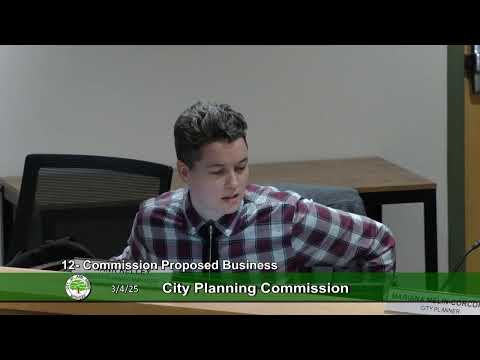
Hundreds of residents attended the Ann Arbor Planning Commission meeting March 4 and filled the public-comment period with competing views on the city’s draft comprehensive plan and proposed residential rezoning, urging either a slower, more neighborhood-centered process or faster, citywide changes to increase housing supply.
Speakers told commissioners the draft plan could allow taller, denser buildings that would “eliminate the majority of single family homes” and change established neighborhood character, while other residents said more homes are needed to preserve affordability and reduce vehicle miles traveled.
The debate opened with neighborhood concerns about building heights and sunlight for rooftop solar. “New builds need to accommodate any building with existing rooftop solar and consider the overshadowing effects on lower rise buildings,” said Nancy Lehi of Montclair Place. Several speakers urged minimum and maximum lot-size limits for lot combinations and subdivisions and called for clearer infrastructure plans for increased waste, transit, parking and street wear from higher density.
Linda Dabrowski of Brooklyn Street described a neighbor who felt unsafe when a nearby house became a large rental property and said the plan lacks “guardrails” to prevent conversion of long-term homes into high-turnover rentals. “I am not a NIMBY,” Dabrowski said. “I am not against increased density in our neighborhoods. But I am against losing the personalities and characteristics of our long established neighborhoods.”
Others from neighborhoods close to campus reported substantial existing rental stock and said blanket upzoning would accelerate speculative purchases and tear down older homes. “New dwelling units are almost always more expensive than what they replace,” said Lisa Jeavons of Burns Park, citing assessor data and local observations of demolition and higher-priced replacement units.
At the same time, many speakers backed the plan’s goals of increasing housing diversity, affordability and sustainability. “I would support the rezoning attempt, and also I support the fact that it's citywide,” said Connor Reynolds of Brooklyn Avenue, adding that spreading zoning changes across the city avoids concentrating impacts in a single neighborhood. Adam Juskiewicz of Las Vegas Drive said he supported “housing abundance” and the commission’s direction on allowing a range of missing-middle housing types.
Climate and building-decabonization advocates told commissioners the plan must pair density with building electrification. Ken Garber, who identifies as a renter and climate activist, said the plan focuses on reducing vehicle miles but lacks measures to cut fossil fuel combustion in buildings. “The comp plan should include both. As of now, it seems to be all about reducing vehicle miles traveled. I’ve seen nothing about reducing fossil gas combustion,” Garber said.
Several speakers requested more neighborhood outreach and clearer visuals of how proposals would play out on specific blocks. Multiple commenters said they learned about major details only recently and urged the commission to slow the process and walk the neighborhoods where changes are proposed.
Commission leadership closed the first public-comment session by directing residents to the city’s planning web pages and an email address for presentations to neighborhood groups, and staff reiterated that a draft would be available for public comment in summer 2025. Deputy Manager Kelly clarified that a forthcoming memo will describe a potential comprehensive-plan adoption process and that staff will present more materials at the March 18 meeting.
The commission did not take a decision on the comprehensive plan at the March 4 meeting; the public-comment period aggregated multiple, sometimes contradictory, neighborhood experiences and policy preferences that commissioners said staff and the commission will address during forthcoming working sessions and ordinance drafting.