Get Full Government Meeting Transcripts, Videos, & Alerts Forever!
Get email alerts on the Economic Development topic
No spam. Unsubscribe anytime.
Lansing schedules hearings to transfer battery-plant tax incentives to LG Energy Solution
Summary
The Lansing Council set a March 24 hearing and approved a resolution to transfer state and local incentives tied to the Ultium/Altium battery plant to LG Energy Solution Michigan, Inc.; city staff said the company will assume the original development commitments and city revenue impacts are limited relative to total investment.
The Lansing City Council’s Committee of the Whole voted unanimously March 10 to set a public hearing for March 24 on transferring an Industrial Facilities Exemption (IFE) certificate from Ultium Cells LLC to LG Energy Solution Michigan, Inc., and separately approved a resolution backing transfer of the state Renaissance Zone to the same buyer.
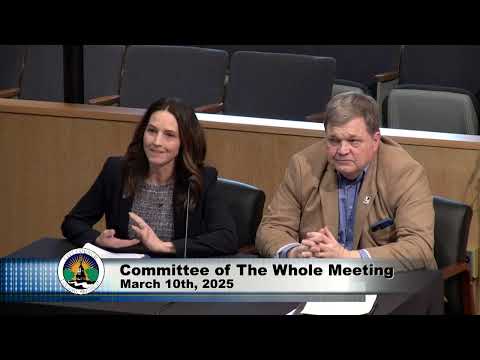
Carl Dorsheimer, director with the Lansing Economic Development Corporation, told the council the plant — originally a joint venture between General Motors and Ultium Cells LLC — is near completion and the transaction transferring GM’s stake to LG Energy Solution is expected to close at the end of the first quarter. “I'm Carl Dorsheimer with the Lansing EDC,” he said in opening remarks.
Why it matters: the site was granted two large incentives in 2021 — a state Renaissance Zone and an Industrial Facilities Exemption certificate — to support construction of a roughly 2.5 million-square-foot battery cell plant in the Lansing–Delta Township 425-area. City staff said those incentives were granted with local support and that LG Energy Solution is asking the state and the Michigan Tax Commission to assign the incentives to the new owner.
City staff said the Renaissance Zone exempted roughly 65 mills and that the IFE certificate abates 50% of a 6.7-mill tax component affecting entities outside the city (Grand Ledge School District and a drainage district in Eaton County). A staff fiscal summary presented to council estimated the Renaissance Zone reduced property taxes to the company by about $6.5 million per year; roughly $1.8 million of that total represented city property taxes, and because Delta Township and the city split certain receipts, the city’s direct annual opportunity cost was described by staff as about $900,000. Staff also stated an earlier estimate of $22 million in total income-tax revenue generated over the 18-year Renaissance Zone term, with roughly half attributed to the city (staff later clarified that split yields about $11 million to the city over the period).
The development agreement that accompanied the original incentives, Dorsheimer said, remains in effect and “is the exact same commitments” being assumed by LG Energy Solution. The agreement in the council packet lists a job commitment of 1,000 full‑time positions; Dorsheimer and company representatives acknowledged local discussions had previously mentioned higher figures (up to 1,700–1,800), but the signed development agreement lists a thousand jobs as the contractual commitment. “They are pledging to meet all the same commitments that were made the first time around,” Dorsheimer said.
Lisa Niscoroni, director of external affairs and government relations for LG Energy Solution, described the company’s plans and product flexibility as reasons for the acquisition. “We look forward to acquiring the assets as well as the property at that site, and moving forward being the owner and operator of the facility,” Niscoroni said, adding LG intends to pursue a broader set of customers and stationary-storage products in addition to EV batteries.
Council questions focused on contingencies, hiring and wage commitments, and how the incentive transfers affect city revenue. Councilmember Garza asked whether the sale was contingent on securing incentives; Niscoroni replied that the sale is contingent on incentives being in place as part of the transaction. Councilmember Hussain asked for a status check on promised construction and permanent jobs; staff said the development agreement remains and that construction employed approximately 1,000 skilled trades workers during build-out, and the agreement’s permanent-hire number remains 1,000 in the signed UDA.
Council action: Vice President Carter moved to set the hearing on the IFE transfer for March 24; the motion passed unanimously. Later the council voted unanimously to approve the resolution supporting transfer of the Renaissance Zone to LG Energy Solution Michigan, Inc., with a technical correction to the legal description of the zone’s boundaries (staff said the revised zone will apply to roughly half of the originally contemplated acreage — about 500 acres — and the resolution will be updated for the March 24 meeting).
What’s next: the March 24 public hearing will be held so the council can consider the formal assignments and any remaining corrections to legal descriptions before forwarding recommendations to the Michigan Strategic Fund (MEDC/MSF) and the Michigan Tax Commission for final action. If transfers are approved by the state agencies, staff said LG Energy Solution will assume the development agreement and related commitments.
Details to note: the incentives and transfers affect multiple taxing jurisdictions (city, township, schools and a drainage district), and staff emphasized the larger incentive value is borne by state-level tax exclusions while the city’s direct annual revenue tradeoff was described as modest compared with the plant’s overall payroll and secondary economic effects.
Votes at a glance: the council set a March 24 hearing for the IFE transfer and approved a resolution to support the Renaissance Zone transfer; both measures passed unanimously.