Get Full Government Meeting Transcripts, Videos, & Alerts Forever!
Get email alerts on the Housing Home Repair topic
No spam. Unsubscribe anytime.
Dayton Home Repair Network says collaborative effort reached nearly 200 households in 2024
Summary
City-funded and nonprofit partners told the Dayton City Commission the Dayton Home Repair Network streamlined access to repairs and weatherization, leveraging about $4.1 million from the Dayton Recovery Plan and serving nearly 200 households with two or more partner programs in 2024.
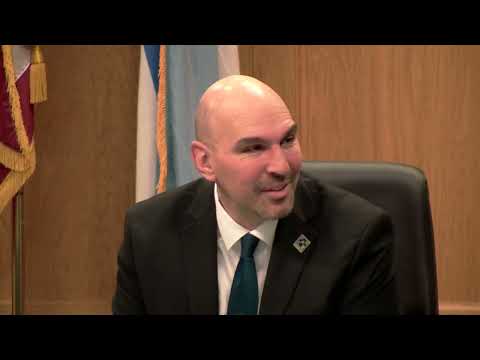
Eileen Harrell, director of the Dayton Energy Collaborative and chair of the Dayton Home Repair Network, told the Dayton City Commission on March 12 that the network coordinated home repair, weatherization and health-and-safety work across multiple nonprofit and public partners and reached nearly 200 households in 2024.
Harrell said the network created a single access point and a universal application that folded five program applications into one, and that partners used the streamlined system to maximize grant funding. "Our goal, by working together, is to ensure that we don't leave any house without essential projects incomplete," Harrell said.
The presentation outlined how the Dayton Energy Collaborative facilitates the network and listed core partners: Rebuilding Together Dayton; County Corps; Habitat for Humanity of Greater Dayton; and Miami Valley Community Action Partnership (which also provides weatherization). Liberty High School and YouthBuild Dayton supply students to complete essential exterior projects, Harrell said. The network used a shared project-tracking spreadsheet and one community access point to route applications to the appropriate partner.
Harrell said the network leveraged about $4,100,000 in funding that flowed to partners from the Dayton Recovery Plan across 2023 and 2024 and estimated the combined potential investment per household can reach about $50,000 depending on eligibility, grant restrictions and house needs. "By addressing home repairs and weatherization together, it brings a great impact as it greatly reduces energy burdens," she said.
Harrell gave an example of a single house that three partners worked on: siding, windows, roof, electrical repairs, pest control, mold abatement, drywall and interior bathroom modifications. The homeowner was quoted in the presentation: "I'm able to breathe better because I have been breathing in that mold and mildew. Since I have arthritis, the walk in shower helps tremendously. I have a more safe and comfortable life in this house." Harrell said the combined investment for that home was close to $90,000.
On eligibility and scope, Harrell told commissioners that most programs serve owner-occupied homes and generally require the owner listed on the deed to live in the house; many programs also require property taxes to be current or on a payment plan and in some cases homeowners insurance. She said Community Action Partnership's weatherization program is one of two that can serve renters, but that the renter and landlord must complete a separate application and that lead/abatement funds for renters are restrictive. "It is case by case," Harrell said, urging callers to use the network's intake line at (937) 369-0654 for eligibility questions.
Commissioner Turner Sloss praised the collaborative and asked whether the network has a numerical goal for 2025. Harrell replied there is no fixed target: services are grant dependent and many grants are not strictly calendar-year based. She said most ARPA funding has been committed and partners continue to apply for new grants.
Harrell and commissioners also discussed addressing properties rated poorly in city inventories. Harrell said some partners have done work funded to correct code violations but that many network grants are not designed to cover larger violations; she said the city would benefit from a dedicated housing trust fund to address those needs.
Commissioners thanked Harrell and network partners and commended the universal application and training efforts aimed at developing the next generation of workers.
The presentation cited the Dayton Housing Policy (J1) as a reference point for the universal application and indicated the network's geographic overlap is Montgomery County, though some partners serve beyond the county.