Get Full Government Meeting Transcripts, Videos, & Alerts Forever!
Get email alerts on the Housing topic
No spam. Unsubscribe anytime.
Board introduces ordinance to add 'middle housing' types, employee housing and guest quarters to county development code
Summary
On first reading, commissioners introduced Bill 1925 to add middle‑housing types, multifamily minor guest quarters and employee housing to Washoe County's Development Code and scheduled a public hearing for April 8.
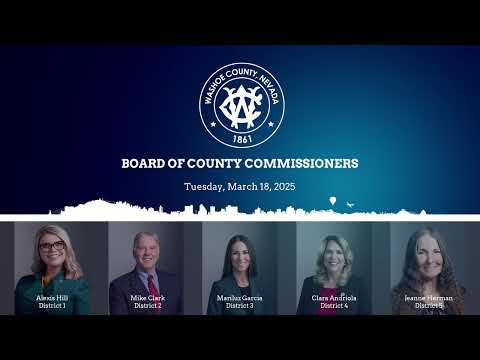
The Washoe County Board of County Commissioners conducted the first reading on March 18 of Bill 1925, a Development Code amendment that would add middle‑housing use types, multifamily minor guest quarters and employee housing to the county’s land‑use rules.
Planning staff said the ordinance package was revised after earlier public workshops to clarify definitions and enforceability. Planning Manager Kat Odelywaca told the board the changes focus on clarity: tightening the guest‑quarters definition and explicitly setting maximum square footage; clarifying employee housing as housing provided for compensation and proposing deed restrictions for enforceability; and specifying how common open space is defined for employee‑housing projects in cases where a special use permit is not required.
Why it matters: the ordinance aims to broaden housing options called the “missing middle” — housing types between single‑family homes and large apartment complexes — to increase supply and help affordability near jobs and transit.
Public comment at the first reading included both support and opposition. Pat Davidson, vice chair of the Sun Valley CAB, commended staff and urged the board to pair code changes with programs to help first‑time homebuyers, such as down‑payment assistance or partnerships with nonprofit developers. Matthew Chatter, a Spanish Springs homeowner, opposed the package’s higher‑density tools for suburban and rural neighborhoods and urged caution about water and infrastructure capacity.
The board introduced the ordinance on first reading and set a second‑reading public hearing for April 8, 2025. The ordinance will return with the full text of changes to Chapter 110 and an updated table of standards that staff said combines six previous tables into a single, clearer reference.
Ending: The first reading moves the ordinance to public hearing; staff will post the full draft for public review and accept additional testimony at the April 8 hearing.