Get Full Government Meeting Transcripts, Videos, & Alerts Forever!
Get email alerts on the Medical Malpractice Informed Consent topic
No spam. Unsubscribe anytime.
Appeals court hears informed-consent and causation dispute after knee-replacement injury
Summary
Counsel disputed on appeal whether a surgeon adequately disclosed the risk of permanent nerve damage before a knee replacement that left the patient with foot drop, and whether the plaintiff needs expert proof on standard-of-care and causation questions.
The Appeals Court heard argument on March 18, 2025, in 24P750, Hennessy v. Cape Cod Orthopedics and Dr. Kinkade, a medical-malpractice appeal centered on alleged lack of meaningful informed consent and disputed causation following a total knee arthroplasty.
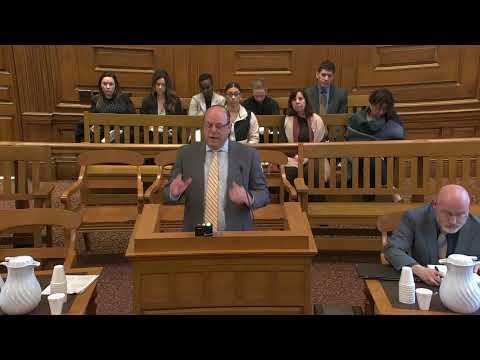
Appellant counsel Kevin Considine explained that Francis Hennessy, a long-serving police officer, underwent a right total knee replacement and subsequently developed permanent peroneal nerve palsy and foot drop. Considine said the risk of permanent nerve injury, while listed in written materials, was not explained to the plaintiff in a manner that would enable an informed decision: "It was disclosed, but it wasn't disclosed in a meaningful way," he told the panel.
Defense counsel Sandra Wysocki replied that the record contains multiple disclosures and testimony that nerve injury was discussed before surgery: she told the court "he did have the disclosure. He did know about the risk of nerve injury," and stressed that prior treatments, records and signed consent forms undercut the plaintiff's summary-judgment argument.
Why it matters: the appeal raises two distinct legal questions — whether a jury must hear the issue of whether the physician's disclosure was reasonable under Massachusetts informed-consent law (Harnish/Canterbury standards), and whether expert testimony is required to prove causation and standard-of-care on the malpractice theory the plaintiff is pursuing. The trial court granted summary judgment for defendants on the grounds that the plaintiff had not produced necessary expert proof, and the appeal contests that ruling.
The panel pressed both sides on deposition testimony discrepancies: the judges noted the plaintiff's own deposition statements (including that he had signed a consent form and had treatment conversations earlier) and probed whether the plaintiff’s later claims that he did not appreciate the specific risk rendered the matter one for jurors. Considine said the question of whether the disclosure was given in a "reasonable manner to a competent adult" is a jury question and that an expert is required only when the negligence asserted falls outside ordinary lay understanding. Wysocki countered that causation issues (linking the surgery to foot drop) and questions about clinical standard of care cannot be resolved by a lay jury absent expert testimony.
No decision was announced; the case was taken as submitted. The panel’s ruling will determine whether the plaintiff may proceed to trial on his informed-consent claim and whether expert evidence is required on the factual causation asserted.