Get Full Government Meeting Transcripts, Videos, & Alerts Forever!
Get email alerts on the Mortgage Discharge topic
No spam. Unsubscribe anytime.
Appeals court questions Bank of America’s proof that recorded mortgage discharge was a mistake
Summary
At oral argument the bank pressed that the discharge of a mortgage was erroneous and should be set aside; opposing counsel said the bank’s primary affidavit lacked personal knowledge and failed to meet the high equitable standard of "full, clear, and decisive" proof.
The Appeals Court heard argument in Bank of America v. Druker (No. 24593) over whether the Land Court correctly set aside a recorded mortgage discharge as erroneous. The parties disputed whether the bank met the heavy equitable burden required to reform title.
Richard Vettstein, representing appellants Neil Drucker and Joanne McKinnon, told the panel the bank relied principally on an affidavit from a Bank of America employee and third‑party servicer material that lacked personal knowledge and therefore could not supply the “full, clear, and decisive proof” the bank must present to justify equitable relief. Vettstein said the affidavit appeared to be a “fill‑in‑the‑blanks” document whose signer had not personally handled the original discharge process and that the Land Court’s reliance on a one‑sentence conclusion that the release “was recorded through mistake or inadvertence” was legally insufficient.
Alexandra Brodsky, counsel for Bank of America, said the totality of the Land Court record supports the finding that the discharge was erroneous and that the bank continues to hold an unsatisfied debt. Brodsky acknowledged the note is not marked “canceled” but argued the material evidence — including affidavits and the absence of payment — supports relief. Both counsel discussed the high standard for equitable reformation and what proof is required to show that a recorded registry entry was issued by mistake rather than as a legitimate release.
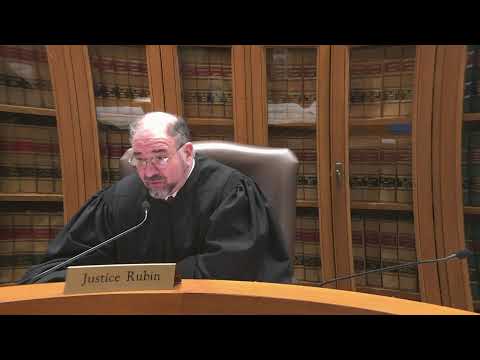
Judges asked about why the bank did not produce a witness with direct knowledge from the third‑party vendor that prepared the recorded discharge and whether the affidavit alone could satisfy the court’s burden. Counsel disagreed about how strongly the Land Court should have required documentary or testimonial proof of how the discharge was prepared and recorded.
Argument concluded and the case was submitted.