Get Full Government Meeting Transcripts, Videos, & Alerts Forever!
Get email alerts on the Appellate Review New Trial Burden topic
No spam. Unsubscribe anytime.
Appeals court hears challenge to judge's grant of new trial in rear-end injury case
Summary
An appellate panel heard argument over whether a trial judge improperly substituted his judgment for a jury's when he granted a new trial after a verdict for plaintiffs in a rear-end collision case, with counsel disputing whether the judge shifted the burden of proof or reasonably weighed the evidence.
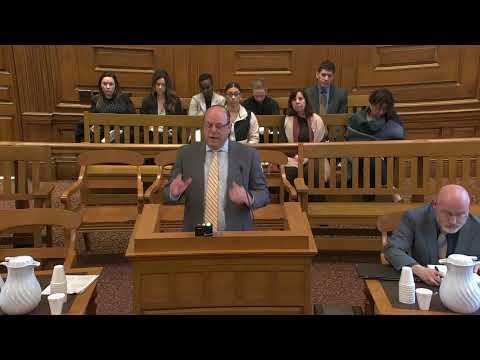
An Appeals Court panel convened in the Armstrong Courtroom on March 18, 2025, heard argument in 24P483, Tresch v. Hansen, a civil appeal that asks whether a trial judge erred by granting a new trial after a jury verdict in a rear-end collision case.
The issue on appeal, as framed by appellant counsel Jessica Savino, is whether the judge "impermissibly shifted the burden of proof onto the defendant" when granting a new trial; Savino asked the court to reverse because, she said, the plaintiffs retain the burden to prove injury and causation by a preponderance of the evidence. Appellee counsel Gregory Conley countered that the trial judge, Judge Wilkins, "was simply commenting on the state of the evidence" and that his view that no reasonable juror could find the absence of injury was a permissible exercise of discretion.
Why it matters: the appeal centers on two intertwined legal questions — the proper standard on a motion for a new trial (whether the judge may reweigh credibility and evidence) and whether the record contained sufficient objective evidence of injury so that a reasonable jury could have found causation. The panel repeatedly returned to the standard of review for alleged abuse of discretion and the narrow circumstances in which an appellate court may overturn a trial judge’s grant of a new trial.
During argument, Savino told the panel that while the defendant stipulated to duty and breach, "this did not excuse the plaintiffs from needing to prove the remaining two elements, namely that there was an injury and that the injury was actually caused by the defendant's negligence." She urged the court that the judge effectively required the defense to produce evidence proving the negative — that there was no injury — rather than leaving that assessment to a jury weighing the plaintiffs’ proof.
Conley responded by pointing to treating and testifying physicians and to documentary records he said supported the treating clinicians’ conclusions. He emphasized that defense expert Dr. Sarris reviewed the records and nevertheless described the plaintiffs’ injuries as soft-tissue injuries that resolved, and that the trial judge relied on the totality of evidence in concluding the verdict was unreasonable. Conley argued the judge was applying a reasonableness standard to the weight of the evidence, not flipping the burden of proof.
The panel pressed both sides on discrete record references — Savino cited the trial court transcript and written decision lines where Judge Wilkins asked whether "there's any evidence from which a reasonable jury could find there was no injury at all," and Conley pointed to testimony and medical records he said supported the judge's assessment. The parties debated whether the expert testimony relied on subjective plaintiff complaints (which defense counsel stressed could be discounted by a jury) or on corroborating objective findings and subsequent surgery (which appellee counsel highlighted).
No decision was announced. Justice Greg Massing, presiding, marked the case submitted at the close of argument. The panel’s eventual opinion will resolve whether Judge Wilkins’ order granting a new trial exceeded his discretion or reflected a permissible reweighing of the record.