Get Full Government Meeting Transcripts, Videos, & Alerts Forever!
Get email alerts on the Employment Retaliation topic
No spam. Unsubscribe anytime.
Appeals court hears arguments over retaliation verdict and punitive damages in Romano v. City of Lawrence
Summary
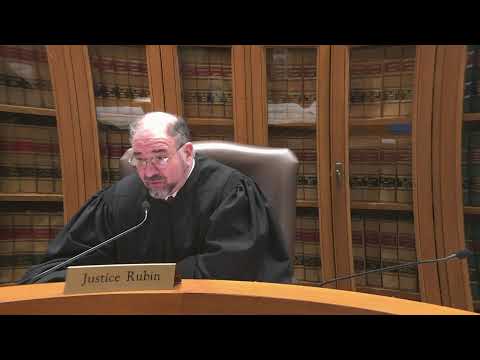
May it please the court: the Massachusetts Appeals Court heard arguments in Romano v. City of Lawrence (No. 24353) over whether a jury’s verdict finding retaliation and awarding punitive damages to Major Kathleen Romano can be reconciled with verdicts for the school on related claims.
May it please the court: the Massachusetts Appeals Court heard arguments in Romano v. City of Lawrence (No. 24353) over whether a jury’s verdict finding retaliation and awarding punitive damages to Major Kathleen Romano can be reconciled with verdicts for the school on related claims.
The issue on appeal, argued by Michael Byrne for the defendants Lawrence Public Schools and the City of Lawrence, is whether there is any record evidence from which a reasonable juror could find that the school’s actions constituted a materially adverse employment action that would support retaliation or the level of misconduct needed for punitive damages. Byrne told the panel the trial judge searched for ways to reconcile an apparently inconsistent verdict and proposed three possible rationales, but the defense maintains the judge “bent over backwards” in looking for a path to sustain the verdict. Byrne said the school’s reporting to the Department of Children and Families (the 51A process) was insulated from liability by statutory immunity the judge instructed the jury about, and he argued there was no evidence the school filed or caused the Army report that Major Romano alleged. Byrne also told the court the jury’s punitive award “falls well short of the standard of outrageousness necessary to support an award of punitive damages.”
Rob Mantel, counsel for Major Kathleen Romano, urged the court to affirm. Mantel said the school effectively demoted Romano by denying her recognized supervisory authority in the high‑school JROTC program, and pointed to evidence he said shows retaliatory animus: a December 15 communication from headmaster Fiato saying AIs first called the relationship reparable then later told him they could not work with Romano, and a separate contemporaneous statement from a school official, Mr. Lombardi, telling Romano she would be “crushed” if she pursued complaints. Mantel argued the school’s later statements to the Army — urging that Romano be replaced because staff could not work with her after she filed complaints — are an adverse employment act and part of an overall strategy to push her out.
Counsel debated whether the critical timeline supports causation. Defense counsel repeatedly emphasized that Romano was on medical leave, that she had the opportunity to seek recertification from the Army, and that the jury rejected her constructive‑discharge claim. Mantel replied that the continuity and character of the school’s conduct after November 2017 — in his view a refusal to restore Romano’s authority while telling her she was entitled to it — could support the retaliation verdict. Both sides discussed the role of the Army’s decertification and the DCF screening (the transcript records that DCF screening was later shown to have been “screened out”) in framing whether the school’s conduct was the proximate cause of any adverse career consequences to Romano.
Mantel also told the court counsel had filed a request for leave to file a sur‑reply and a claim for reasonable attorneys’ fees. The arguments concluded with the panel taking the case under submission.
The court did not indicate a ruling at argument; the matter was submitted for decision.