Get Full Government Meeting Transcripts, Videos, & Alerts Forever!
Get email alerts on the School Finance topic
No spam. Unsubscribe anytime.
Garfield Heights board approves revised five-year forecast as district faces state fiscal caution risk
Summary
The Garfield Heights City School District board approved a March optional five‑year financial forecast showing a projected $2.45 million deficit this year and a path to fiscal caution from the state; trustees discussed a May renewal levy and possible cuts to avoid a state takeover.
The Garfield Heights City School District board on Monday approved a revised five‑year financial forecast that projects a $2,453,000 shortfall for the current fiscal year and warns the district will enter fiscal caution if enrollment and revenue trends persist.
The forecast, presented by Treasurer Oko, shows the district's projected July 1 cash balance fell from an estimated $9.4 million in the November forecast to about $6.96 million in the March update. "We are spending more than we have taken in," Treasurer Oko said during the presentation, noting enrollment declines and changes to state funding as the main drivers.
The update was approved on a voice/roll‑call vote (moved by Miss Daniels; second by Miss Thomas). Trustees also discussed a May renewal levy and potential remedial steps required by the state should the district be placed in fiscal caution or fiscal emergency.
Why it matters: The state of Ohio notifies districts that fall below certain cash thresholds and can require a deficit‑reduction plan, place a district in fiscal caution, and — if deficits deepen — establish a state commission that would approve major fiscal decisions. The board's forecast shows the district could reach a negative cash balance by fiscal 2027 if current trends continue; without the May levy the district's projected negative balance grows substantially.
Key figures and context from the presentation: Treasurer Oko told trustees the district's funded enrollment used for state aid fell from about 2,969 in earlier years to roughly 2,434 in the most recent funding payment, a drop that reduced state aid and increased the district's per‑pupil spending on paper. He said personnel costs remain the largest expenditure category (about $27.2 million in salaries and roughly $10.12 million in benefits reported in the forecast) while purchased services rose largely because the district has hired outside special‑education services that it could not provide in‑house.
Oko said the March optional forecast shows a projected cumulative five‑year shortfall approaching $26 million if no corrective action is taken. He told the board that the state will issue a letter placing the district in fiscal caution and will require a deficit‑reduction plan; the board must submit remedies to the state. "They will put us in fiscal caution and we'll have to make a plan to address that," Oko said.
Board members asked about timing and remedies. Missus Daniels asked whether the remedies will have to take effect immediately; Oko responded that fiscal caution begins July 1 and the district will be under that status for the year, and that many corrective actions (and potentially a levy) would be part of the plan the board approves and submits to the state. He said a successful May renewal levy would reduce the depth of cuts required; if it fails, the district's projected deficit would be much larger.
Trustees and staff gave numbers and examples during the discussion: the forecast projects the district will need to show a deficit‑reduction plan that reduces about $2.9 million from projected shortfalls next year; without the May renewal levy the district's projected negative cash balance by fiscal 2027 could be roughly $10.8 million. Treasurer Oko said gaining 300 additional funded students would substantially improve the district's position — he repeatedly cited "300 students" as the gap between the current funded count and the more favorable projection used in the November forecast.
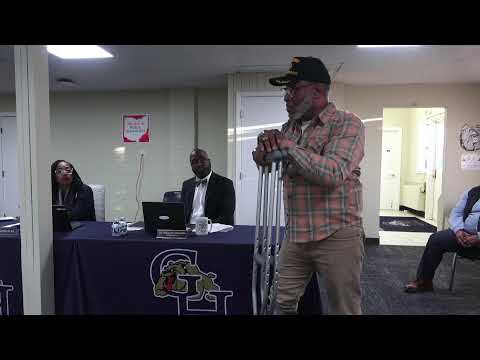
Public comment: Resident Frank Dudley urged the board to avoid a state takeover and offered to help with community engagement efforts, including a proposed fundraiser to build family engagement and scholarships. "I don't want you to have to go to no fiscal emergency," Dudley said, urging board members to pursue community support.
Votes at a glance: - Adopt agenda — Moved by Miss Thomas; second by Miss Cox. Outcome: approved (roll call: Miss Thomas, Miss Cox, Missus Daniels, Miss Morrison, Miss King — all yes). - Approve minutes (Feb. 10 special; Feb. 18 regular; Feb. 22 special retreat) — Moved by Miss Morrison; second by Miss Cox. Outcome: approved (roll call recorded as yes for all voting members present). - Approve financials for February — Moved/second (not specified on the record). Outcome: approved (roll call recorded as yes for trustees present). - Approve March optional five‑year forecast — Moved by Miss Daniels; second by Miss Thomas. Outcome: approved (roll call: Missus Daniels: yes; Miss Thomas: yes; Miss Cox: yes; Miss Morrison: yes; Miss King: yes). - Enter executive session at 7:03 p.m. to consider personnel matters and collective bargaining per the Ohio Revised Code citation read on the record — Moved by Miss Morrison; second by Missus Daniels. Outcome: approved (roll call yes).
What the board said next: Superintendent Dr. Reynolds and Treasurer Oko said they will develop the district's required deficit‑reduction plan and return to the board with specific recommendations. Oko said some measures could include program and staffing changes, but that the board must weigh academic impacts when choosing cuts. He also said the board could include a levy in its remedy package to the state if it seeks voter approval to mitigate the needed reductions.
What is not decided: The board did not approve a specific deficit‑reduction plan at the meeting and did not set final levy ballot language. Trustees and staff said they will return with recommendations and that additional budget work sessions and the regular May forecast will provide updated numbers.
Details and next steps: Treasurer Oko said the district will resubmit updated forecasts in May and will prepare options for the board to consider for the deficit plan required by the state. The board also scheduled an executive session during the same meeting and announced the next special board meeting on March 27 at 6 p.m. and the April regular meeting on April 14 at 6 p.m.
Ending: The board approved the March optional forecast to disclose a material variance in revenue and to begin planning remedies; trustees said they will continue reviewing enrollment and revenue data and will consider levy and expenditure options in coming weeks.