Get Full Government Meeting Transcripts, Videos, & Alerts Forever!
Get email alerts on the Local Government topic
No spam. Unsubscribe anytime.
House approves bill to require districted county supervisor seats in three counties after heated debate
Summary
The Iowa House passed Senate File 75, changing county supervisor elections from at-large to district-based in Johnson, Black Hawk and Story counties. Supporters said the bill will give rural residents a clearer voice; opponents called it partisan and a removal of local choice. The measure passed 65-32.
The Iowa House on Wednesday approved Senate File 75, a bill requiring Johnson, Black Hawk and Story counties to use districted seats for county supervisors rather than at-large elections, passing the measure 65-32.
Supporters said the bill will ensure geographic representation for rural and small-town voters who they contend have been underrepresented under at-large voting. Representative Kaufman, the bill—s floor manager, said the change would restore geographic balance and make local officials more responsive to rural priorities.
Opponents, including Representative Zabner and other Democrats, said the bill singles out three populous counties that elect Democrats and removes the counties— ability to decide their own supervisor representation by petition and ballot. Zabner called the measure "the most anti-democratic bill" he had seen in the legislature and argued it targets counties based on partisan outcomes rather than policy reasons.
Lawmakers exchanged examples and population figures during debate. Representative Lawler and others argued at-large systems can dilute minority or geographically concentrated voices and called districting a remedy to ensure rural communities have representation on boards that make decisions about rural roads, land use and local services.
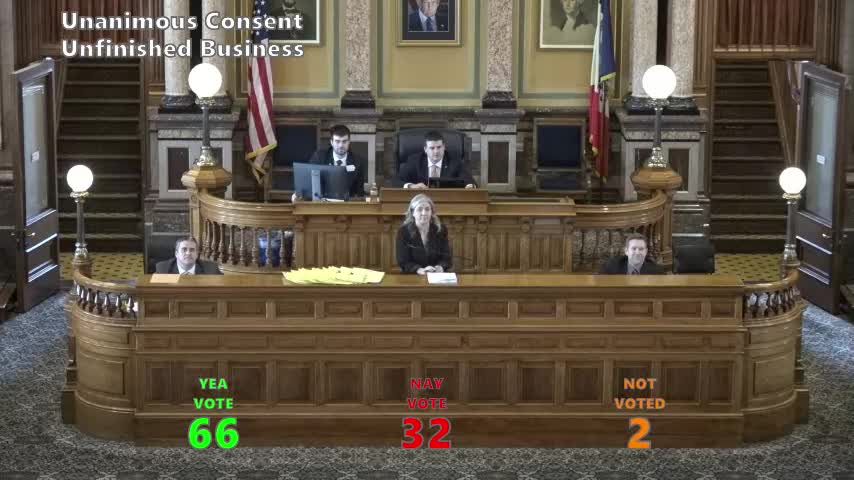
After roughly two hours of floor debate and several representatives questioning the bill—s selective application, the House put the bill to a voice and recorded vote. The clerk recorded 65 ayes, 32 noes and 3 not voting; the chair declared the bill passed and the title agreed to.
The bill now moves on for messaging to the Senate.