Get Full Government Meeting Transcripts, Videos, & Alerts Forever!
Get email alerts on the Senate Rules Procedure topic
No spam. Unsubscribe anytime.
Iowa Senate defeats rules amendment that would have allowed petitions to force floor debate on pipeline and other bills
Summary
The Iowa Senate defeated Senate amendment 3029, a proposed change to chamber rules that would have allowed a petition process to bring bills to the floor for debate, by a roll-call vote of 18 ayes to 30 nays.
The Iowa Senate defeated Senate amendment 3029, a proposed change to chamber rules that would have allowed a petition process to bring bills to the floor for debate, by a roll-call vote of 18 ayes to 30 nays.
Senate amendment 3029 would have altered the chamber’s operating rules to permit a petition—signed by senators—to move a bill out of committee and onto the floor for debate. Proponents repeatedly said the change was designed to ensure topics such as a pipeline eminent-domain bill would receive full debate in the Senate rather than being blocked in committee.
The amendment’s sponsor and several senators argued the measure responded to repeated constituent requests. "It's time to have the debate," said Senator Visignano. In a floor statement urging adoption, a senator described farmers and landowners who had "come to this capital...day after day, month after month...just asking you to have the debate. Not asking you to pass it. They're asking for the debate. Democracy."
Senator Walz of Johnson said the amendment would "take power out of the hands of the insiders and give it back to the duly elected senators of the state of Iowa," and urged colleagues to back what Walz called a restoration of members' ability to legislate. Senator Donahue and Senator Dotsler also voiced strong support, saying constituents whose land might be affected deserved a chance for the Senate to debate the issue on the floor.
Opponents said the proposal would undermine the chamber's majority rule and party control of the agenda. "34 Republicans occupy this chamber...those 34 Republicans are more than capable of making decisions, passing good policy, and getting the job done," said Senator Klemish of Winneshiek, who spoke in opposition and urged colleagues to vote no.
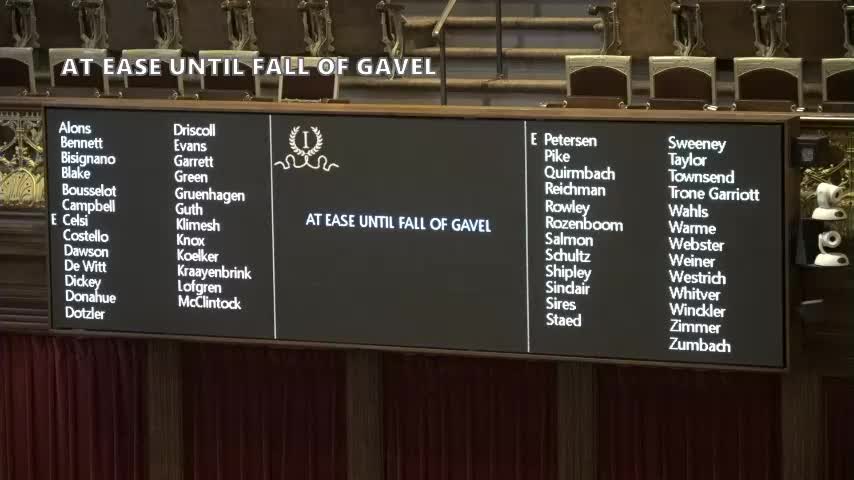
After a recorded roll-call was requested, the secretary opened the voting system. The transcript records several named no votes: Senator Sinclair (no), Senator Costello (no), Senator Pike (no), Senator Buslow (no), Senator Driscoll (no) and Senator Kellker (no). The secretary later announced: "Those voting aye, 18. Those voting nay, 30." The amendment was defeated.
Following the vote, the Senate returned to Senate resolution 6; Senator Klemish moved adoption of that resolution, and the presiding officer announced the ayes had it and that Senate resolution 6 was adopted. Later in the session, Senator Whitver of Polk requested unanimous consent to immediately message Senate files 601, 583 and 594 to the other chamber; the request was granted. Senator Whitver also moved to adjourn; the motion prevailed and the Senate adjourned until the date announced.
Why it matters: The amendment would have changed internal Senate rules about when a bill may be brought to the floor for debate. Supporters said the change would give more senators an avenue to force debate on matters raised by constituents—most prominently, a bill addressing eminent domain for pipeline projects. Opponents said the change would upend the majority's control of the chamber agenda.
Votes at a glance - Senate amendment 3029 (rules change to allow petition to bring bills to the floor): Roll-call vote recorded; Aye 18, Nay 30 — amendment defeated. - Senate resolution 6: adopted (voice vote announced as ayes having it). - Unanimous consent granted to immediately message Senate files 601, 583 and 594 to the other chamber.
Speakers and attributions below reflect the names as they appear in the transcript.