Get Full Government Meeting Transcripts, Videos, & Alerts Forever!
Get email alerts on the End Of Life Options topic
No spam. Unsubscribe anytime.
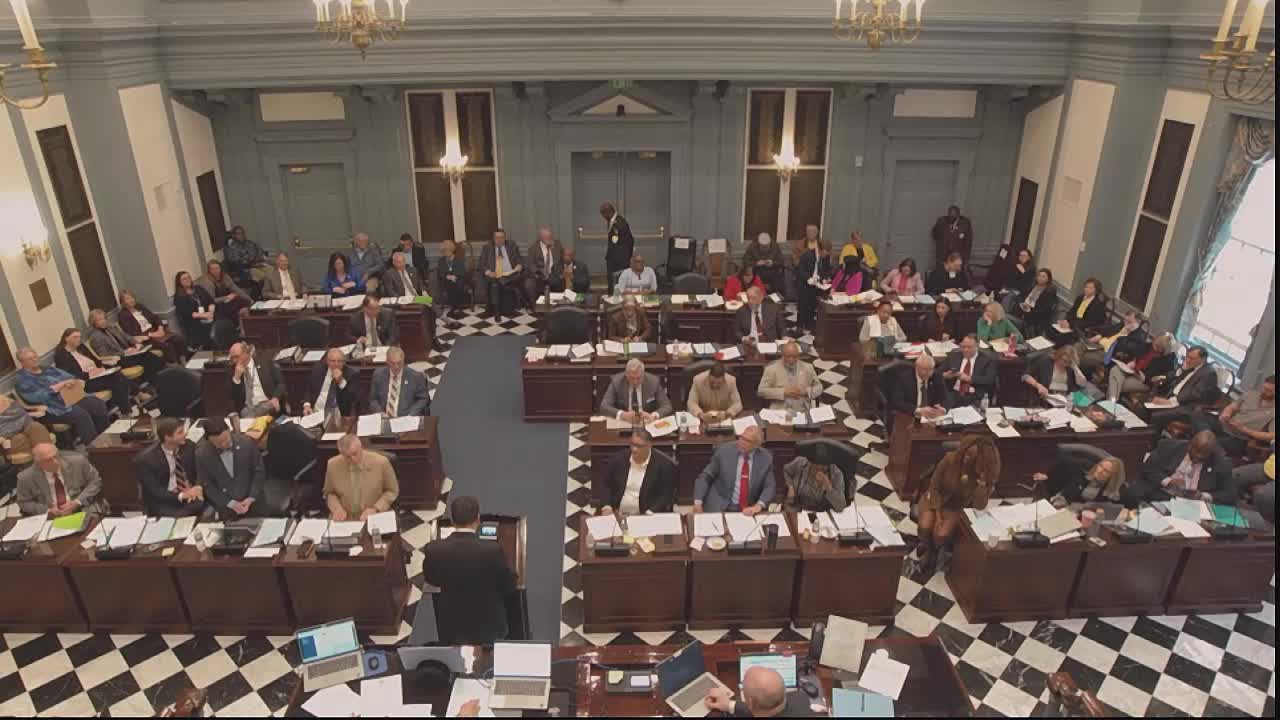
House passes End of Life Options Act after hours of debate
Summary
The Delaware House passed House Bill 140, the End of Life Options Act, after extended debate over safeguards, training, and implementation. The bill allows terminally ill, competent adults to request and self-administer prescribed medication to hasten death and passed 21-17 with 3 absent.
House Bill 140, the End of Life Options Act, passed the Delaware House on a 21-17 vote with three members absent after extended floor debate on safeguards, training and how the law would be implemented.
Sponsor Representative Melissa A. Morrison, who brought the bill forward, said the measure allows “terminally ill Delawareans [to] choose to limit or avoid terrible suffering” and described the statutory safeguards that would be required. She said the bill requires that the patient be diagnosed with a terminal illness with a prognosis of six months or less, that the patient request medication and self-administer it, and that at least one medical or mental health professional find the individual has decision-making capacity, is making an informed decision and is acting voluntarily.
"This act is known as the Ron Silverio Heather Block End of Life Options Law," Morrison said during her remarks. She also told colleagues, "This is not suicide," while addressing opponents who equated the measure with suicide.
Nut graf: Supporters said the bill provides a legal, regulated option for terminally ill patients who seek to avoid prolonged suffering and builds in review and reporting requirements for oversight. Opponents expressed concern about prognostic uncertainty, potential gaps in training for clinicians who must evaluate mental capacity and coercion risks, disposal and control of the prescribed medication, and broader social impacts.
The bill requires the Department of Health and Social Services (DHSS) to develop rules to collect compliance information and annual reports, and authorizes the Department of State to promulgate forms and seek prescription monitoring data to assess compliance. Witnesses and staff on the floor explained that the medication is expected to be a compounded liquid from specialty pharmacies and that patients generally pay out of pocket; the bill does not require insurance coverage for the medication.
Opponents on the floor raised several cautions: Representative Frank Burns said psychiatric associations had not adopted training or protocols to assess decision-making capacity for this use and cited state experiences in other jurisdictions, and others questioned enforcement and the ability of state agencies to detect coercion. Drafting staff clarified the departments that would have authority: DHSS for facility regulation and Department of State for professional licensure oversight.
The House recorded the roll call at 21 yes, 17 no, 3 absent. The measure passed the House and will proceed according to legislative process.
Ending: The bill’s supporters said they expect DHSS and licensing authorities to issue implementing regulations and reporting forms should the law take effect; opponents urged caution and additional safeguards.