Get Full Government Meeting Transcripts, Videos, & Alerts Forever!
Get email alerts on the Civics Education topic
No spam. Unsubscribe anytime.
House committee passes bill requiring instruction on founding fathers' religious and moral beliefs in grades 6–12
Summary
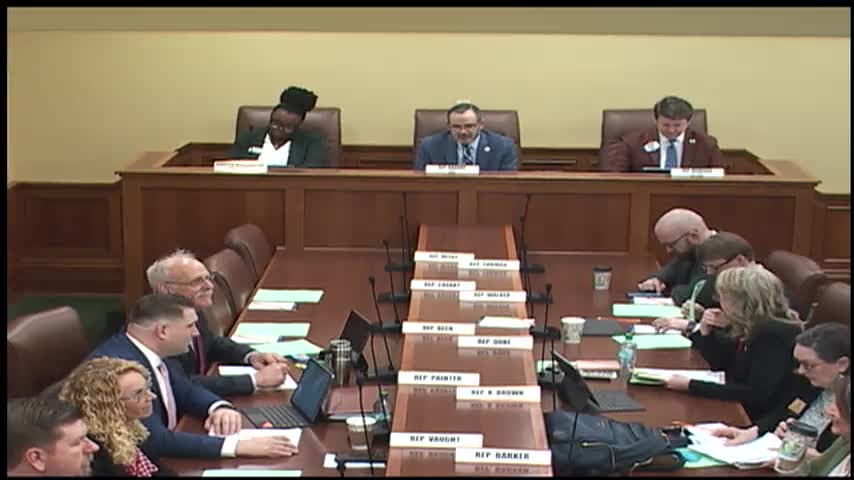
A House Education Committee vote moved HB 1705 forward after several hours of testimony and questions over how schools should teach the historical influence of religion on the nation’s founders.
A House Education Committee vote moved HB 1705 forward after several hours of testimony and questions over how schools should teach the historical influence of religion on the nation’s founders.
The bill requires the Arkansas Department of Elementary and Secondary Education (DESE) to review and, where needed, embed certain material about how the religious and moral beliefs of the founding generation influenced the framing of the Declaration of Independence and the U.S. Constitution into social studies standards for grades six through 12 beginning with the 2026–27 school year.
Supporters told the committee that the measure is aimed at improving civic knowledge by requiring instruction about the founders’ beliefs and the historical sources that influenced them. Representative Hope Duke, sponsor of HB 1705, said the bill would “embed” content across grades 6–12 rather than require new textbooks. Jacob Alleva of the Arkansas Department of Education told the committee DESE would review standards and expects to complete the work in about a year and to rely on existing open educational resources to avoid what he described as an unfunded mandate.
Proponents argued that contemporary civic literacy measures are weak and that teaching primary documents and the founders’ stated values will strengthen students’ understanding of the constitutional order. Tony Rose of the National Association of Christian Lawmakers told the committee, “If you don't understand that, it's very difficult to understand how The United States Of America is supposed to work.” Representative Scott Payne said he hoped the bill would “do a lot to change and to inform our folks about our government.”
Opponents and some members raised separation-of-church-and-state concerns and cautioned about possible religious instruction in public classrooms. Representative Rickson McCollum said, “This bill has the potential... for indoctrination,” and recorded a no vote. Committee members pressed sponsors on implementation details and whether textbook purchases would be required; sponsors and DESE officials said they expected no statewide fiscal impact because districts could use existing materials.
The committee approved HB 1705 on a voice vote. Representative Duke closed by saying the bill is intended to encourage debate and deeper discussion among students about the founders’ beliefs and legislative intent.
What happens next
With committee approval, HB 1705 is now available for further House action and eventual floor consideration. If enacted, DESE told the committee it would undertake a standards review with stakeholder input and aim to have K–12 implementation steps in place in time for the 2026–27 school year.