Get Full Government Meeting Transcripts, Videos, & Alerts Forever!
Get email alerts on the Transgender Health Youth Liability topic
No spam. Unsubscribe anytime.
Judiciary Committee pauses bill creating civil cause of action over youth social transitioning
Summary
A long, contentious hearing on House Bill 16‑68 — the Vulnerable Youth Protection Act — drew extensive testimony for and against the measure before sponsor Representative Mary Bentley asked to pull the bill for revision. The Arkansas Attorney General's office told the committee it had "facial constitutional concerns."
State Representative Mary Bentley introduced House Bill 16‑68 as an amendment to align current law with what she called the SAFE Act and to create a civil cause of action for harms the bill ties to "social transitioning" of minors.
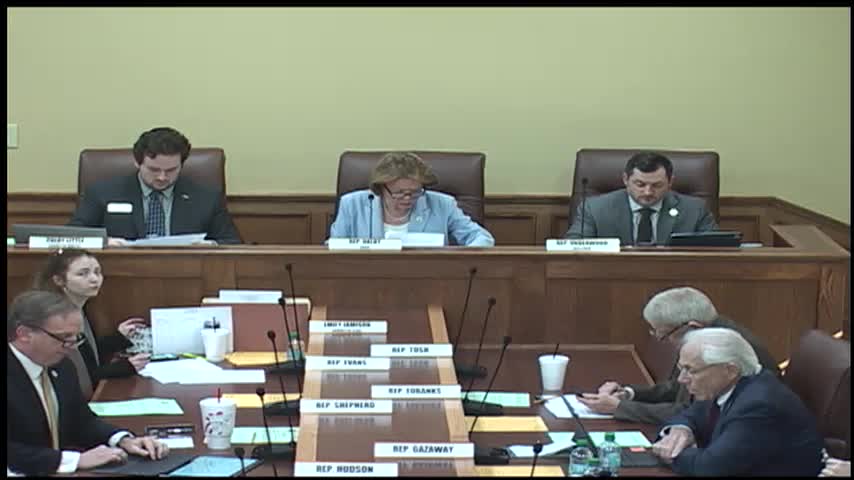
The bill prompted more than an hour of committee questioning and public testimony before Representative Bentley, the bill sponsor, asked that the measure be pulled so she could rework definitions and have amendments engrossed for public review. The committee granted that request without objection and said the bill will be placed on special order when refiled.
The bill, as presented, would broaden civil liability for persons who "knowingly" assist a minor in social transitioning and extends a statute-of-limitations provision discussed in committee from 15 years to 20 years. Bentley said her amendment adds the word "knowingly" and is meant to make the draft "perfectly line up with the SAFE Act that we had passed previously." She described the bill as protecting children and parents and said it is intended to restore earlier mental-health approaches she said were once common.
The committee heard legal and constitutional concerns from the Arkansas Attorney General's Office. Justin Brasher, Senior Assistant Attorney General, told the committee the AG's Office is "sympathetic to the cause" but has "facial constitutional concerns" about the measure as drafted and would not be able to defend it in court. Brasher singled out First Amendment issues raised by members and cited prior bills the office had asked sponsors to amend before they could be defended in federal court.
Multiple legislators raised questions about how the bill would operate in practice. Representative Hudson asked whether the SAFE Act was still enjoined; committee members confirmed it is. Representative Clowney pointed out the bill changes the statute-of-limitations language to 20 years, calling that a substantive change. Representative McCullough asked whether the amendment contains only technical alignment with prior laws; Bentley answered she had worked with lawyers and the attorney general's office and that the amendment "lines up with the SAFE Act." Representative Moore asked whether the bill's broad definition of "social transitioning" (which includes changes to clothing, hair, names and pronouns) could expose barbers, retail clerks or teachers to long-term liability; Bentley and witness testimony emphasized the bill requires actors to "knowingly" assist in social transition for liability to apply.
The AG's office told the panel it is defending the SAFE Act in federal court and recently secured a Title IX decision; Brasher warned the committee that elements of HB 16‑68, in particular provisions that could create civil liability for speech or commonplace acts such as using a name or pronoun, would face high constitutional scrutiny.
The committee heard roughly 20 public witnesses during a timed testimony period. Speakers included therapists and parents who supported the bill and many residents, students and advocates who opposed it. Opponents warned the language is overly broad and likely to have a chilling effect on school staff, medical providers and community members. Several witnesses described personal experiences they said would be harmed by the bill; others called it unconstitutional or based on outdated or disputed research. Representative Bentley said she would work with the AG's Office and members who raised concerns and would refile the bill with clarified language and engrossed amendments.
With the sponsor's request, the committee took no final vote on HB 16‑68 and the measure was withdrawn from consideration for the day. The chair said the bill will be placed on special order after the sponsor delivers engrossed amendments for public review.
Representative Mary Bentley and the Arkansas Attorney General's Office were the principal voices for questions and clarification; more than a dozen other legislators and roughly 20 members of the public gave testimony for or against the proposal.