Get Full Government Meeting Transcripts, Videos, & Alerts Forever!
Get email alerts on the Disabled Veteran Exemption topic
No spam. Unsubscribe anytime.
Committee clarifies documentation for disabled‑veteran property tax exemption; bill passed as amended
Summary
Representative Cameron Cooper (District 57) presented House Bill 1072 to clarify that a single verification letter from the Department of Veterans Affairs is sufficient to establish eligibility for the 100% total and permanent disabled‑veteran property tax exemption.
Representative Cameron Cooper (District 57) presented House Bill 1072 to clarify application of the disabled‑veteran personal‑property and homestead tax exemption. The bill would specify that annual submission of a verification letter from the Department of Veterans Affairs is not required; a single letter establishing 100% total and permanent service‑connected disability is sufficient to claim the exemption and be retained in the county collector's file.
Cooper said the change responds to constituent complaints that collectors were requiring an annual letter even though the statute describes a permanent disability. Brandon Wilson, a constituent and 100% disabled veteran, told the committee his father nearly lost a farm after the exemption was removed because of missing paperwork. Wilson asked the committee to ease the annual burden on veterans and their families.
Josh Curtis, representing the Association of Arkansas Counties and the County Collectors Association, opposed the change as drafted. Curtis told the committee: "We don't like to speak against disabled veterans, but what our collectors like to do, we like to help our disabled veterans." He said collectors already exercise accommodations (sending reminders, allowing two years to produce paperwork) and expressed concern that records must be verified when status changes or when a surviving spouse claims the exemption.
Paul Gehring of the Department of Finance and Administration told the committee the bill's change does not alter qualifying criteria and that DFA's analysis showed no state fiscal impact because the bill does not expand eligibility. Assessors and county officials testifying said local practice varied and some counties require more frequent verification; several asked for better interagency data sharing to prevent inadvertent loss of benefits.
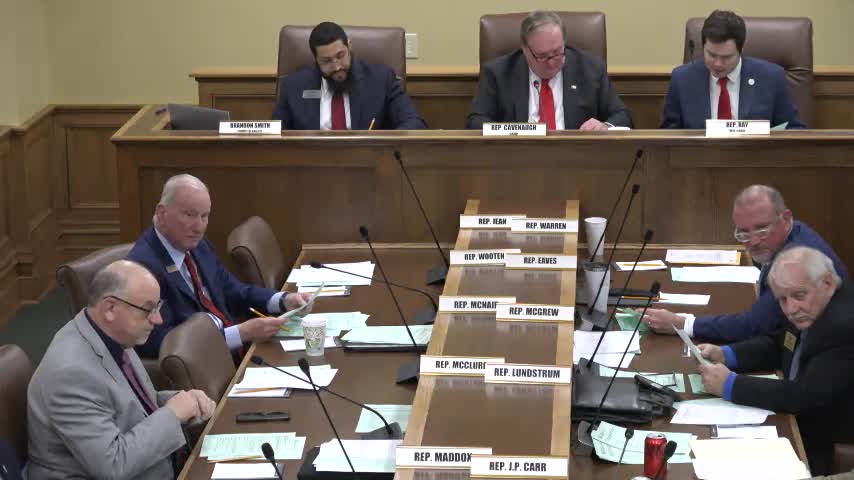
After debate and testimony from veterans and county officials, the committee adopted an amendment addressing county concerns and passed HB 1072 as amended by voice vote. Representative Wooten moved to pass the bill as amended on the floor; the committee recorded the motion and passed the bill by voice vote (no roll‑call tally recorded in the transcript).
Ending: Supporters described HB 1072 as a practical fix to prevent veterans from losing long‑held exemptions due to missing paperwork; county collectors asked for implementation safeguards and data‑sharing improvements to avoid fraud and to protect legitimate beneficiaries.