Get Full Government Meeting Transcripts, Videos, & Alerts Forever!
Get email alerts on the Mental Health Involuntary Hold topic
No spam. Unsubscribe anytime.
Senate approves bill clarifying involuntary holds for behavioral impairment from medical conditions
Summary
The Senate approved legislation clarifying that a person exhibiting a behavioral health impairment from a medical condition — such as dementia or encephalitis — may be subject to a short involuntary medical hold and must be reassessed at regular intervals.
The Senate approved legislation clarifying that a person exhibiting a behavioral health impairment caused by a medical condition — for example dementia or encephalitis — may be placed on an involuntary medical hold and reassessed to determine whether continued confinement is warranted.
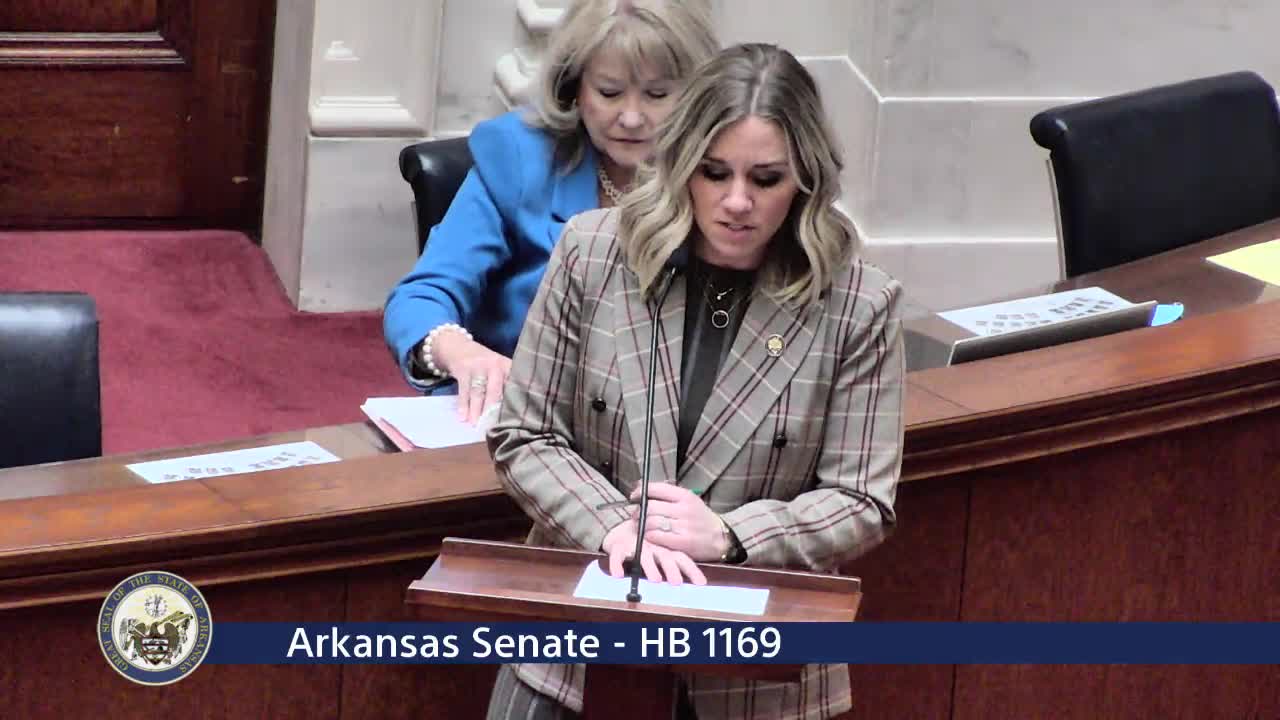
Senator Sandra Davis, who presented the House bill on the Senate floor, said current law was silent about behavioral impairments caused by medical conditions and that clinicians, courts and judges worked together on agreed language. “If you're in the hospital and it's clear you're leaving, trying to freely leave as most people can, but you're in no mental condition to do so,” Davis said, the new language allows clinicians to hold and reassess the patient.
Davis stressed safeguards: the bill specifies that the person be reassessed every 24 hours by a physician or advanced practice registered nurse to confirm whether the confinement remains warranted; the statutory maximum 72‑hour hold remains the outer limit under law. She said the provision is intended primarily to address cases where a patient has no family present and is at clear and present risk if allowed to leave.
Senators asked about family notification, the setting for the hold and legal defensibility. Senator Stubblefield and others emphasized family‑involved situations; Davis said existing confidentiality and involuntary‑commitment rules remain in force and that the bill does not remove rights. Senator Hickey asked whether the Attorney General had reviewed constitutional issues raised by involuntary confinement; Davis said she would confirm that review.
Senator Gilmore and others pressed for clarity on the “clear and present danger” standard and how the 24‑hour reassessment works; Davis and other sponsors said language had been negotiated with neurologists, psychiatrists and judges to balance patient protection and civil liberties.
The secretary called the roll; the announced tally for House Bill 11‑69 was 22 yeas, 1 nay, 5 not voting, 6 present and 1 on leave. The bill passed and will return to the House.
Ending: Sponsors and medical stakeholders said the change fills a practical gap when clinicians confront dangerous behavior tied to an underlying medical condition and where family or representatives are not immediately available. Senators emphasized reassessment, statutory limits and existing privacy protections remain in place.