Get Full Government Meeting Transcripts, Videos, & Alerts Forever!
Get email alerts on the Building Permits And Inspections topic
No spam. Unsubscribe anytime.
Senate advances bill allowing developers to hire third‑party plan reviewers and inspectors
Summary
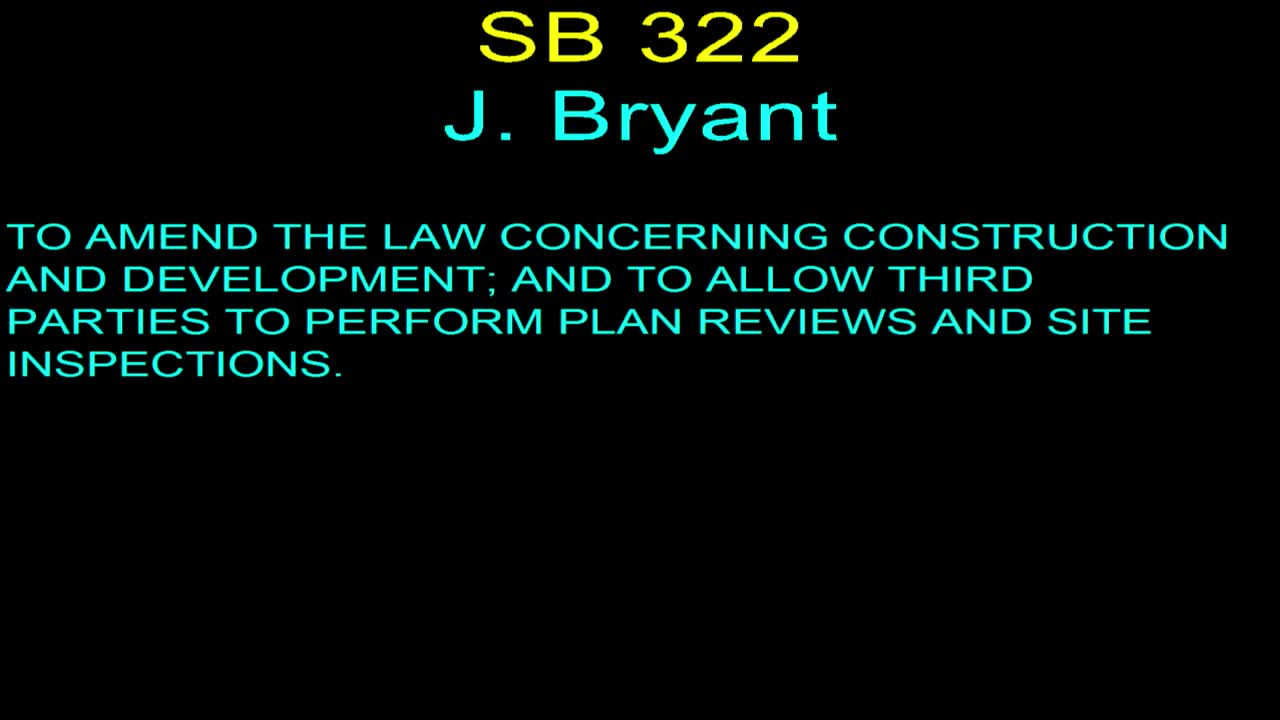
The Senate passed legislation authorizing applicants to hire approved third‑party plan reviewers and inspectors for building permits; bill includes limits, insurance requirements and dispute resolution routes and passed 34–0.
Senators passed a bill that lets applicants for local building permits hire approved third‑party firms to perform plan reviews and site inspections, a measure supporters say will shorten permit timelines and reduce soft costs for development.
Senator Bryan Brown, who presented the bill on the floor, said the measure would allow applicants to “go hire your own third party reviewer…at your cost” when a city or county cannot process plans quickly. He described existing delays that can range “from 2 days…to several years” and said the change shifts the burden from local governments to applicants while preserving municipal oversight.
Brown and other backers said the third party must meet qualifications set by the local authority — examples given included a registered architect or engineer — and that the municipality would have short, specified time windows to respond. “The county or the city has 10 days to determine what the problem is,” Brown said, and the local authority would have one day to act on a third‑party inspection report. The bill excludes some facility types — hospitals, nursing homes, jails, airports and structures affecting national security — and authorizes the municipality to require final walkthroughs and issue the certificate of occupancy.
To address concerns about reliability, the measure requires third‑party inspectors to carry errors‑and‑omissions (E&O) insurance so an owner who can prove negligent inspection could seek compensation from the inspector’s carrier. Brown said the bill does not alter municipal immunity: “This bill does not change that…cities are still not liable,” he said.
Supporters pointed to a version of the approach used in other states. Brown noted Georgia had implemented a similar system and that stakeholders — including developers and municipal staff who helped draft the language — were involved in revisions. He also described a dispute resolution path that can escalate to a municipal council or the Arkansas Department of Labor and Licensing for professional board issues.
Senator Tucker asked about objectivity when applicants pay the third party; Brown replied that final authority remains with the municipality for the certificate of occupancy and that professional liability and reputation provide practical checks on inspectors. After floor debate and questions, the Senate adopted the bill; the secretary announced the final vote as 34 yeas, 0 nays.
The bill now moves to the House for consideration.
Ending: The bill sets new timelines and insurance requirements for third‑party reviewers and imposes exclusions for sensitive facility types. Supporters say it aims to reduce permit delays and soft costs for projects; the House will now consider the measure.