Get Full Government Meeting Transcripts, Videos, & Alerts Forever!
Get email alerts on the Community Wellbeing topic
No spam. Unsubscribe anytime.
Utah State researcher presents Ogden well‑being survey; residents flag air quality, growth and housing costs
Summary
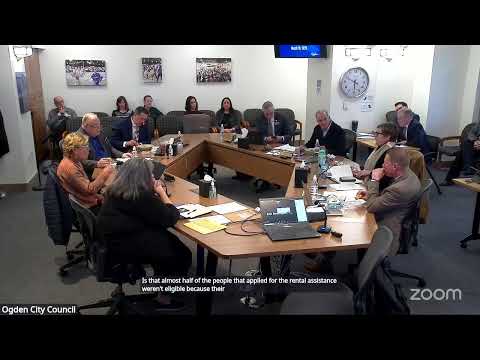
Professor Neeb, a visiting researcher from Utah State University’s College of Natural Resources, briefed the South Ogden City Council work session on the results of a community well‑being survey conducted for Ogden.
Professor Neeb, a visiting researcher from Utah State University’s College of Natural Resources, briefed the South Ogden City Council work session on the results of a community well‑being survey conducted for Ogden.
The survey found that ‘‘personal well‑being in Ogden averages about a 3.91’’ on a five‑point scale, Professor Neeb told the council, and that 72% of respondents rated their personal well‑being at 4 or 5. She said the survey sample included residents across the city and that District 4 rated highest on many measures while District 1 trended lower.
The nut graf: the survey gives city leaders granular, resident‑level data on quality‑of‑life priorities and perceived gaps. Professor Neeb said the project’s goals are to ‘‘help inform local planning decisions’’ and supply comparative data to planners and other agencies.
Key findings presented included: - Highest‑rated domains: family life, connection with nature, mental health and physical health. - ‘‘Red zone’’ (important but rated lower): safety and security and local environmental quality; open comments linked environmental concerns to loss of open space, air quality, and limited bike/walk infrastructure. - Perception vs. reality on growth: 67% of respondents said population growth is ‘‘too fast,’’ despite the presenter noting the city’s measured growth rate over the last decade is about 4.5%. - Correlations: personal well‑being was strongly associated with income and age; respondents reporting a disability recorded statistically lower well‑being.
Professor Neeb warned about sampling limits: the survey used an online convenience sample and under‑represented renters and younger adults. ‘‘We want to be really clear about who we hear from and who we don't,’’ she said, noting roughly 10% of survey respondents were renters while the city’s renter population is nearer 40%.
Council members asked clarifying questions about representation, renters’ connectivity and whether community members travel outside the city to access nature; Professor Neeb said those patterns can explain high connection to nature coexisting with lower local environmental quality ratings.
The presentation concluded with an offer to provide the full report and raw open comments: the project team provided a public report and a separate file of respondent comments for council review. Professor Neeb said the project seeks funding to run a follow‑up survey in 2026.
Ending: City staff indicated the report will be posted on the project website and be used as a reference for planning discussions; council members thanked the presenter and asked staff to follow up on specific demographics and renters’ responses.